Here is the form fillable ToV Character Sheet you have been waiting for!
In 2015 Wizards of the Coast published the current version of Dungeons and Dragons (D&D 5E). Last year they published an update to the game that they refer to as the 2025 version (I call it D&D 5.5). Last year Kobold Press published “Tales of the Valiant” (ToV). It is also based on D&D 5E and is also an update to that game. If you aren’t familiar with it you should go over to koboldpress.com and get a free copy of the 385 page “Black Flag Reference Document” PDF. It contains everything you need to play ToV. If you like it you can get their equivalent to WotC’s “Player’s Handbook” (PHB), “Dungeon Master’s Guide” (DMG), and “Monster Manual” (MM). ToV calls them the “Player’s Guide” (PG), “Game Master’s Guide” (GMG), and “Monster Vault” (MV).
Last month I posted my updated character sheet for D&D 5.5. This is a similar character sheet specifically for “Tales of the Valiant”.
This incorporates the changes to D&D 5E found in ToV’s “Players Guide”. It is 4 pages, 2 sheets if printed on both sides. (Note that I will be referring to the set of all 4 pages in the singular, as the “character sheet”.) Page one has all of your character’s basic information and all you need for combat other than your spells. Page two is just for equipment and treasure. Page three is Character background and notes. Page four is for magic spells. It can be printed blank and filled out with a pencil, or you can fill in the forms on your device and most of the calculations will be done for you. It automatically calculates; ability and saving throw modifiers, carrying capacity and jump distances, Armor Class, Proficiency Bonus, Passive Perception, Skill check modifiers, Weapon attack bonus and damage, Equipment cost and weight, and more. It can fill in all the adventuring gear you get if you select an equipment pack (such as an “Explorer’s Pack”). In addition to that, it contains a new Autofill option that can fill in all the standard information based on your class, Lineage, Heritage, and Background.
Update #1: 2/9/2025 Minor item cost display fix for Adobe Acrobat For items whose cost is in copper pieces or silver pieces it was displaying their cost in fractions of a gold piece. It now displays their cost in cp or sp if their total cost is less than the next more valuable coin. Adobe Acrobat wasn’t displaying this correctly.
Filling in the ToV Character Sheet
These instructions are for use with the character sheet you can download above. You can print a blank Character Sheet and fill it out by hand. If you fill it out on your device, many boxes will be filled in for you. There is information at the end of this on how to use this sheet for multi-class characters.
PAGE 1
1 – Autofill/Manual Selection Box
This selection box is independent of the similar one on page 4. Be aware that one page might be set to Autofill and the other one set to Manual. Select ‘Autofill’ mode to automatically fill in portions of this page based on your choices, as described below. Choose ‘Manual’ mode to keep existing information unchanged and make your own edits. CAUTION: If you switch to ‘Manual’ mode to make a few changes and then switch back to ‘Autofill’ mode, all your changes will be lost, replaced by the ‘Autofill’ information. I recommend you leave it in ‘Autofill’ mode until you are finished with Page 1, including your weapons and armor. You can then safely change to ‘Manual’ mode and make changes and additions. You may want to make a backup copy of your sheet before making changes. Each of the numbered sections below where this selection makes a difference will include a description for both Autofill mode and Manual mode. Note: This selection box will not appear on the printed page.
2 – Your Character’s Name
The text you enter here will also appear in the same location on the other pages. The text can be entered or changed on any page.
3 – #____
Character sheet version. If you make multiple copies of your character sheet enter the version number here. Like the Character Name, this text will also appear on the other pages.
4 – XP/Milestones Selection Box
If ‘XP’ is selected the Next Level Goal will be calculated and entered for you here based on your current character level (see below). If “Milestones” is selected the text on this line will be replaced by a “Notes” section. Note: This selection box will not appear on printed pages
5 – Campaign Information
This is where you enter your name, the name of the campaign you are in and the date this character was created. Trust me, if you look back at this years from now, you will appreciate having this information.
6 – Ability Sores
Enter your ability scores in the boxes. All the data to the right of the ability scores will be filled in for you based on the ability scores, including your carrying and jumping stats based on your strength score. Because your long jump distances are based on your walking speed, and there are several ways it might change, I don’t calculate that for you. Check the little box next to the Saving Throw modifier to indicate that you are proficient in that Save.
7 – Class
Select your Class from the drop-down box. The Class Feature box (number 10 below) will display information relevant to this class. Subclass: You can select a subclass from the drop-down menu. Autofill mode: All the information from the Class Features section in the PG for this Class will be filled in, down to (but not including) Starting Equipment. If there is any current text in any of these areas it will be removed. You can also type text into this ‘Class’ box, but if it differs in any way from one of the selections in the drop-down box any text below will be removed. Manual mode: No matter what you select or enter into the “Class’ box, existing text in this section will remain unchanged. You can change or add any text in the ‘Class’ box or any of the information below it.
8 – Lineage
Select your Lineage from the drop-down box. Natural Adaption: Some call this a Sub Lineage. Some lineages (such as the Dwarf) don’t have one. You can type in the name of a Natural Adaption or select one from the drop-down. Autofill mode: An abbreviated version of the size, speed, and special traits for this lineage will be filled in. If there is any current text in any of these areas it will be removed. You can also type text into the ‘Lineage’ box, but if it differs in any way from one of the selections in the drop-down box any text below will be removed. Manual mode: No matter what you select or enter into the ‘Lineage’ box, existing text in this section will remain unchanged. You can change or add any text in the ‘Lineage’ box or any of the information below it.
9 – Heritage and Background
Select your Heritage and Background from the drop-down boxes. Autofill mode: The Languages and Traits for your Heritage will be filled in. Your Talent, Skill Proficiencies and Additional Proficiencies from your Background will be filled in. Manual mode: No matter what you select or enter into the ‘Heritage’ or ‘Background’ box, existing text in these sections will remain unchanged. You can change or add any text in either box or any of the information below them.
10 – Class Feature box
The content of this box will change depending on your character’s Class (number 7). It shows certain traits for the selected class that change based on class level and/or abilities and provides check boxes to track uses of limited use features. If no class is selected, or anything is entered into the Class box (number 7) other than what can be selected from its drop-down box, this will show the default Class Feature box which only shows a stylized die and contains an empty text box where you can enter any notes you may want.
11 – Advantages, Disadvantages, Languages and Luck Points
Enter any types of checks where you get advantage or disadvantage on the role, your known languages and track your luck points.
12 – Level
You must enter your character’s current level in this box.
13 – Proficiency Bonus, Initiative Modifier, Heroic Inspiration, Passive Perception, Death Saves, and Exhaustion, Hit Dice, and Hit Points
Hit Dice Type, Proficiency Bonus, Initiative Modifier and Passive Perception will be calculated and filled in for you. The check boxes in Heroic Inspiration, Death Saves, and Exhaustion are for you to check off as needed during play. You should enter your MAX Hit Dice. The Used Hit Dice, Current and Temp Hit points are for you to use to track them during play.
14 – Armor Class
Select the type of armor you are wearing, or “Unarmored” and select “Shield” or “No Shield”. Your Armor Class (AC) is displayed in the shield symbol. It is your Basic AC + the bonus you get if you have a Shield. The Basic AC is calculated by adding together the values in the three boxes under your armor type (or “No Armor”). Your shield bonus is +2 but if you have a magic shield you can select the bonus from the drop-down menu in the OTHER box under the Shield/No Shield box. Autofill mode: Armor: When you select an armor type the BASE value will be entered in the first box. The MOD value will be filled in with your DEX Modifier if it is Light armor, and your DEX Modifier (max 2) if it is Medium armor, and “None” if it is Heavy armor. The OTHER box is for you to enter any magical + it may have. Unarmored: If you have selected “Unarmored” the BASE will be 10 and MOD will be your DEX Modifier. If your Class is Barbarian the BASE will be 13 and MOD will be your CON Modifier. If your Class is Monk the BASE will be 10, MOD will be your DEX Modifier and OTHER will be your WIS Modifier. If not used otherwise, you can use the OTHER box to enter any other modifier you may get to your AC when unarmored. (If your character is a Sorcerer, the third level feature “Draconic Resilience” gives you an unarmored AC of 13 + your DEX Modifier. This is the only one that isn’t done for you. You will need to switch to Manual Mode to enter that. CAUTION: later switching back to Autofill Mode will replace anything you have entered anywhere on this page while in Manual Mode back to its autofill status. Manual mode: All of these boxes are to be filled in by you. The totals are still added up and show as your AC in the big armor class shield.
15 – Features, Traits and Talents
You can enter any information you want in these text boxes. They are intended for you to list your characters Features, Traits, Talents and any reminders you may want to include.
16 – Skills
The ability modifier to use for each different skill check is listed here. Empty circles indicate your character is not proficient in that skill. Click once on an empty circle to fill that circle, indicating that you are proficient in that skill. Your Proficiency Bonus will be added to your ability modifier for that skill check. Click on the filled circle and a slightly larger circle will be added around the filled one, indicating that you can add double your proficiency bonus to this skill check, and the number will change to reflect this change. Click on this same circle again and it will change to a half-filled circle, indicating that you add only half your proficiency bonus to this skill check and the number will change again. Click on it one more time and it will change back to not proficient. Stealth: To the right of the stealth skill is a checkbox in front of the word “Disadvantage”. This box will automatically be checked as a reminder to you if the type of armor you are wearing gives you Disadvantage on DEX (Stealth) checks. It will automatically be checked if your armor has the “Noisy” property.
17 – Physical Description
Refer to the information on your Lineage, but within those general guidelines your character can look any way that you want.
18 – Character Sketch
If your PDF reader supports it, you can click on the image area and it will pop-up a “Select Icon” menu where you can select an image you have access to. Or just draw a picture of your character in the frame.
19 – Weapons
Select a weapon from the drop-down menu.
Select an Ability from the drop-down above the second column of boxes to will apply that ability’s modifier to the attack bonus. This should typically be STR for melee weapons and DEX for ranged weapons.
Click on the check box between the two boxes below that to also apply that modifier to the damage calculation. You don’t add your ability modifier to the damage when attacking with second weapon in your other hand unless the modifier is negative.
If you have proficiency in the use of this weapon, click on the circle next to “Proficient”. (This will fill in the circle and replace the word “None” in the attack bonus row with the value of your Proficiency Bonus.)
If this is a magic weapon select the magical bonus from either of the drop-downs in that column. The magic bonus will show up in both boxes and be applied to the attack bonus and to the damage.
To add additional modifiers to the attack bonus or to the damage select the modifier from the box in the MISC. column. Autofill mode: The Weapon Properties, Reach and/or Range, and Damage Dice will be filled in for you. On the line under the weapons name, it will list the weapon’s properties and the weapon options (if any) in square brackets. Manual mode: You will have to fill in the Weapon Properties, Reach and/or Range, Damage Type, and Damage Dice boxes.
20 – Ammo Check boxes
For weapons that use ammunition, you can use these boxes to check off your ammunition as it is used.
21 – Update Calculations
All of the information filled in automatically for you should update whenever you make any change. Sometimes it doesn’t. You can press this button to force the form to update all of the calculated fields. Note: This selection box will not appear on the printed page.
22 – Clear
Be careful to not press this unless you want to erase everything from all of the fields on all pages. If you press it by accident, you may be able to recover the lost information if you press CTRL Z. This button is useful for clearing all fields and starting over, or before printing a blank form to fill out by hand. Note: This selection box will not appear on the printed page.
PAGE 2
Note: There is no Autofill or Manual mode for this sheet, although the Adventuring Gear section (number 29) has a “No Pack” option that is similar to Manual mode that only applies to the Adventuring Gear section.
All Equipment Lists
For all items in the Armor, Shield, Weapons, Ammunition, Equipment, and Adventuring Gear sections.
Item Selection: The drop-down will only lists items of the appropriate type. For example: Item selection in the Tools section will only list tools. If you have an item that is not on the drop-down menu, or you want to modify a name, you can type anything you want in the box. (Refer to number 29 for exceptions.) Track: If this box is selected a check mark will appear in the box and the cost and weight of this item will be included in the boxes labeled “Tracked Cost” and “Tracked Weight,” found at the bottom of the “Adventuring Gear” section. #: Number, or quantity. You will need to enter a number in this box for how many of this item you have. If you leave this box empty (it will not display the number 0) the Cost and Weight boxes will remain empty. Magic Bonus: (Only found on the Armor, Shield, and Weapons sections.) You can select a magic modifier to apply to the item from the drop-down menu. Cost: This box will contain the cost of the item. It takes the cost from the PG and multiplies that by the number of items. If the text in the item box doesn’t match exactly any option on the drop-down, no calculations are made and you can enter or change the cost. You can’t enter the cost in cp, sp, or pp. You will need to convert the cost into its value in gold pieces, or fractions of a gp. 1 CP = 0.01 GP, 1 SP = 0.1 GP , 1 PP = 10 GP. Note: If the text in the item box isn’t on the drop-down list, the cost you enter here will ignore the number in the # column. Also note that this is the price of the item. If you later sell the item you will typically only be able to sell it for a maximum of 1/2 its original value. There are some exceptions, such as for gems and coins. Weight: This box will contain the weight of the item (in pounds). It takes the weight from the PHB and multiplies that by the number of items. If the text in the item box doesn’t match exactly any option on the drop-down, no calculations are made and you can enter or change the weight. Note: If the text in the item box isn’t on the drop-down list, it will ignore the number in the # column.
23 – Character’s Name and #____
Character’s Name and Character sheet version (see 2 & 3 on page 1).
24 – Armor & Shield
ARMOR: Select the armor you are wearing (or select “No Armor”). The text here will also appear on page 1 (number 14), and used to calculate your armor class. The text can be entered or changed on either page. If the text here doesn’t match exactly what is on the drop-down menu the AC calculation on Page 1 may be inaccurate. Magic Bonus: This will appear on page 1 as a magic + for any armor, or as OTHER if unarmored. Exception: This value will be ignored when unarmored if your class is Monk. SHIELD: Select “Shield” or “No Shield”. The text here will also appear on page 1 (number 14), and used to calculate your armor class. The text can be entered or changed on either page. If the text here doesn’t match exactly what is on the drop-down menu the AC calculation on Page 1 may be inaccurate. Magic Bonus: This is added as a bonus to your armor class with or without a shield. (It can be changed here or on page 1.)
25 – Weapons
Select your Weapons from the drop down menu. They will appear in the same order here and on page 1 (number 19). The text can be entered or changed on either page. If the text here doesn’t match exactly what is on the drop-down menu the Attack Bonus and Damage for this weapon on Page 1 may be inaccurate. Magic Bonus: This will appear on page 1 as a magic + for the weapon and can be selected on either page.
26 – Ammunition
Select your Ammunition from the drop down menu. Note that the Cost and Weight are calculated based on the cost and weight of one item and most ammunition is sold in bundles of multiple items. So if, for example, you purchase 20 arrows, be sure to enter 20 in the number column to get an accurate cost and weight calculation.
27 – Tools
Select any Tools from the drop down menu.
28 – Equipment
Select Equipment from the drop down menu. You may want to first enter your starting Equipment in the Adventuring Gear section. Both sections contain the same drop-down list of items.
29 – Adventuring Gear
This section is to automate the selection of bundles of items that are available as “Equipment Packs” in the PG, many of which are available options with your chosen background. Selecting a Pack: When you select a pack (by checking the box by the name of the pack) all of the Number, Name, Cost, and Weight boxes in this section will be cleared and replaced with the items available in that pack. As long as one of the packs is selected you can’t make any changes to this list. Selecting “No Pack”: When you select “No Pack” the “Adventuring Gear” section will function exactly the same as the “Equipment” section. It is important to note that this does not clear any of the current information in this section so you could, for example, select the Explorer’s Pack and then select No Pack, leaving all the items that came with the Explorer’s Pack. You could then remove, add or change items as you choose. COINS: The coins section at the bottom of the “Adventuring Gear” section is unaffected by the selection of any Pack. This row is where you can track your money, in the form of CP (Coper Pieces), SP (Silver Pieces), GP (Gold Pieces), and PP (Platinum Pieces). Tracked Cost & Tracked Weight: These show the Totals (in GP and pounds) of all the items you have checked for tracking. This is an easy way to see how much weight you are carrying. You could easily choose to not track items that you have in a bag of holding for example, or items you own but are not currently carrying. Another tip; if you are on a shopping spree, you can select the items you are thinking of buying and only select them to track. That will give you a quick cost total.
30 – Trinket
This is a section where you may want to enter the description of a unique item. It’s cost and quantity will not be tracked.
31 – Treasure
This has two text fields, one for a name like “Treasure from the Dragon’s hoard.” And a largr area for listing multiple items. These will not be tracked.
32 – Magic Items
There is space here to list 4 magic items. There is a field above the box for the item’s name and a larger text field in the box for a description. The check box beside the word “Attuned” can be checked if you are attuned to the magic item. (You can be attuned to no more than a number of items equal to its proficiency bonus (PB) at any one time.)
PAGE 3
33 – Character’s Name and #____
Character’s Name and Character sheet version (see numbers 2 & 3).
34 – Adventure Motivation
This is where you can enter the Adventuring Motivation you selected from those suggested by your background, for one you created.
35 – Backstory
Many players like (and some GMs require you) to come up with a character backstory. Players create backstories for their D&D characters to add depth, motivation, and personality to their roles in the game. A well-crafted backstory can enhance roleplaying, provide plot hooks for the GM, and make the character more engaging for both the player and the party.
There is plenty of room here to also add any notes about your character that don’t easily fit elsewhere on the character sheet.
36 – Allies and Organizations
A place to list the names and something about the other Player Characters (PCs) in the game, along with who the character belongs to. There may be organizations in the game world that you want to remember. Some may be friendly and some not.
PAGE 4
37 – Autofill/Manual Selection Box
This selection box is independent of the similar one on page 1. Be aware that one page might be set to Autofill and the other one set to Manual. Select ‘Autofill’ mode to automatically fill in portions of this page based on your choices, as described below. Choose ‘Manual’ mode to keep existing information unchanged and make your own edits. Note: This selection box will not appear on the printed page.
38 – Your Character’s Class
Autofill mode: Your Character’s Class as it appears on page 1, will be copied here. Manual mode: When you switch this to Manual mode, any text here remains, but you can edit, delete or change it.
39 – Character’s Name and #____
Character’s Name and Character sheet version (see numbers 2 & 3).
40 – Spellcasting Ability
Autofill mode: This will show the ability used by this class of spellcaster. You can’t change the text. Manual mode: You can change the text,
41 – Subclass
Autofill mode: This will reflect the sub-class that is on page 1. Manual mode: The text in this field is fully editable.
42 – Save DC and Attack Bonus
Autofill mode: The spellcaster’s save DC and attack bonus is calculated and displayed here. Manual mode: You can change the number.
43 – Spells Known or Prepared
Autofill mode: If the spellcaster has a limited number of spells they know or that they can prepare, that number is displayed here. You cannot change the number. Manual mode: You can change the number.
44 – Rituals Known
Autofill mode: If the spellcaster can cast Rituals, the number they have available is displayed here. You cannot change the number. Manual mode: You can change the number.
45 – Spell Slots and Castings
Autofill mode: The spellcaster’s number of spell slots is calculated for each spell level and displayed here. You cannot change the numbers. Manual mode: You can change the numbers. Castings: The check boxes are for you to use during your game to check off the spell slots as you use them.
46 – A space for notes
This area is where you can enter notes specific to your spellcasting features and abilities.
47 – Known Cantrips
Autofill mode: The number of cantrips you can know is calculated based on your class level is calculated and displayed here. You cannot change this number. Manual mode: You can change the number.
48 – Another space for notes
This space at the top of the list of spells of each level is for any notes you may want to keep regarding spells of this level.
49 – Spell List
You can enter the name of the spells you have access to for each spell level. You can enter anything you want here. You might want to include the page number where the spell can be found in the PG. I like to include things [C] for concentration. Note: The example character sheet is for a Druid that can cast Leaf Ring spells without preparing them. I have indicated that with this symbol: [●]. This is a standard text filled circle, feel free to copy it from here and past it into any text field on this character sheet.
50 – Prepared Spells
If your Class has you prepare a certain number of spells from your list of spells, you can indicate the prepared spells by filling in the circle (by clicking on it). If you click on it a second time it will be replaced by the letter “R” Use this to indicate a Ritual spell that you know. You don’t have to have a Ritual Spell prepared to cast it. Clicking it a third time returns it to a circle.
Multiclass
To use this character sheet for a multiclass character there are two options.
Option 1. One way is to simply switch to Manual mode and enter everything any way you want. Option 2. To take full advantage of the features available on this character sheet I recommend the following:
Create a level 1 character in Autofill mode. Enter all its weapons, armor, and equipment.
When you are ready to add a second class switch to Manualmode (if you haven’t already).
In the Class box (number 7) add the level for the current class and the name of the second class and its level. For example, if you have a third level Barbarian and add two levels of Sorcerer you might enter its class as: Barbarian,3 Sorcerer,2.
Make changes as required to the other class related features on this section. You can delete anything that no longer applies or that you don’t need to reference.
The Class Feature box (number 11) will change to allow several lines of text. You can use this area to enter information you want to keep track of, or that won’t easily fit in other places on the sheet.
Enter the combined level of all of your classes in the “Level” box (number 12). This is important because many calculated values are based on this.
On page 4, select “Manual” mode and make any needed changes.
Final Comments
The main thing to remember is that the character sheet is yours. Use it in any way that makes sense to you. You can write outside the boxes, use circles and arrows, scribble in the margins, or use it in any way that you choose. Also, you don’t have to completely fill out every box before you start playing. If you never decide on your character’s eye color, it won’t affect the game. [As a DM, I do strongly recommend that you give your character a name before your second gaming session. I have played too many times with one or more “no name” characters. This can be a distraction.]
Here are a couple of tips. First, if you are using a printed character sheet, use pencil instead of ink. Many things can happen during an adventure that can cause things to change so keep an eraser handy. Second, if you can cast spells, you might want to use one or more weapon boxes on page 1 for quick reference to your favorite offensive spells.
Having problems? Occasionally users of my previous Character Sheet would report issues with getting everything to work. The problem has typically been with the PDF reader they are using. Problems with the PDF reader in their browser were common. If you have access to a desktop computer running Windows, I recommend you first download a copy of the file to your hard drive. Then open the file using your preferred PDF reader. The most popular one is the free “Adobe Acrobat” PDF Reader. This Character Sheet has been tested on that and it all appears to work. If you are curious, I created this using PDF-XChange Editor.
Call to action. I’m always looking to improve my resources for the D&D community! I would love to hear your feedback on this new character sheet. Let me know what you think in the comments below. If you encounter any issues using the sheet, please report them so I can address them. And if you have any suggestions for improvement, I’m all ears! Your input helps me create the best possible tools for fellow Dungeon Masters and players.
Here is the form fillable 2024 D&D Character Sheet you have been waiting for!
This incorporates the 2024 changes to the fifth edition of Dungeons and Dragons (that I call D&D 5.5) found in the new Players Handbook (PHB). If you are familiar with the previous version of my Character Sheet you will find that it has change in many ways. It is still 4 pages, 2 sheets if printed on both sides. (Note that I will be referring to the set of all 4 pages in the singular, as the “character sheet”.) Page one has all of your character’s basic information and all you need for combat other than your spells. Page two is just for equipment and treasure. Page three is Character background and notes. Page four is for magic spells. As before, it can be printed blank and filled out with a pencil, or you can fill in the forms on your device and most of the calculations will be done for you. It automatically calculates; ability and saving throw modifiers, carrying capacity and jump distances, Armor Class, Proficiency Bonus, Passive Perception, Skill check modifiers, Weapon attack bonus and damage, Equipment cost and weight, and more. It can fill in all the adventuring gear you get if you select an equipment pack (such as an “Explorer’s Pack”). In addition to that, it contains a new Autofill option that can fill in all the standard information based on your class, species and background. There is no need for a separate character sheet for each different class, or for multiclass, you only need this one sheet. (Watch for updated Class Feature Sheets in a future post.)
Update #1: 2/8/2025 Minor revisions and changes Thanks a lot to Anonymous for pointing out some errors, and I found a few more. Many were Adobe Acrobat not displaying everything the same way that PDF-XChange Editor does. And I made a few other, mostly cosmetic, changes. I also updated the instructions.
Update #2: 2/26/2025 Corrected Sub Species Sub Species was only displaying a number. Now you can select a sub species (if any are available) for the chosen Species.
Update #3: 3/7/2025 Display of Total Item Costs Corrected a problem that, when using Adobe Acrobat, the total cost of tracked items would sometimes display a huge number.
Filling in the 5E Character Sheet
These instructions are for use with the character sheet you can download above. You can print a blank Character Sheet and fill it out by hand. If you fill it out on your device, many boxes will be filled in for you. There is information at the end of this on how to use this sheet for multi-class characters.
PAGE 1
1 – Autofill/Manual Selection Box
This selection box is independent of the similar one on page 4. Be aware that one page might be set to Autofill and the other one set to Manual. Select ‘Autofill’ mode to automatically fill in portions of this page based on your choices, as described below. Choose ‘Manual’ mode to keep existing information unchanged and make your own edits. CAUTION: If you switch to ‘Manual’ mode to make a few changes and then switch back to ‘Autofill’ mode, all your changes will be lost, replaced by the ‘Autofill’ information. I recommend you leave it in ‘Autofill’ mode until you are finished with Page 1, including your weapons and armor. You can then safely change to ‘Manual’ mode and make changes and additions. You may want to make a backup copy of your sheet before making changes. Each of the numbered sections below where this selection makes a difference will include a description for both Autofill mode and Manual mode. Note: This selection box will not appear on the printed page.
2 – Your Character’s Name
The text you enter here will also appear in the same location on the other pages. The text can be entered or changed on any page.
3 – #____
Character sheet version. If you make multiple copies of your character sheet enter the version number here. Like the Character Name, this text will also appear on the other pages.
4 – Campaign Information
This is where you enter your name, the name of the campaign you are using this character in and the date it was created.
5 – XP/Milestones Selection Box
If ‘XP’ is selected the Next Level Goal will be calculated and entered for you here based on your current character level (see below). If “Milestones” is selected the text on this line will be replaced by a “Notes” section. Note: This selection box will not appear on printed pages.
6 – Ability Sores
Enter your ability scores in the boxes. All the data to the right of the ability scores will be filled in for you based on the ability scores, including your carrying and jumping stats based on your strength score. Check the little box next to the Saving Throw modifier to indicate that abilities Saving Throw Proficiency.
7 – Class
Select your Class from the drop-down box. The Class Feature box (number 11 below) will display information relevant to that class. Subclass: You can select a subclass from the drop-down menu. Autofill mode: All the information from the Class Features section in the PG for this Class will be filled in, down to (but not including) Starting Equipment. If there is any current text in any of these areas it will be removed. You can also type text into this ‘Class’ box, but if it differs in any way from one of the selections in the drop-down box any text below will be removed. Manual mode: No matter what you select or enter into the “Class’ box, existing text in this section will remain unchanged. You can change or add any text in the ‘Class’ box or any of the information below it.
8 – Species
Select your Species from the drop-down box. Sub Species: You can also type in the name of a Sub Species or select one from its own drop-down. Whatever you enter for the Sub Species has no effect on any other text. Autofill mode: All the information from the Traits table in the PHB for this Species will be filled in. If there is any current text in any of these areas it will be removed. You can also type text into this ‘Species’ box, but if it differs in any way from one of the selections in the drop-down box any text below will be removed. Manual mode: No matter what you select or enter into the ‘Species’ box, existing text in this section will remain unchanged. You can change or add any text in the ‘Species’ box or any of the information below it.
9 – Background
Select your Background from the drop-down box. Autofill mode: All the information from the Traits table in the PHB for this Background will be filled in. If there is any current text in any of these areas it will be removed. You can also type text into this ‘Background’ box, but if it differs in any way from one of the selections in the drop-down box any text below will be removed. Manual mode: No matter what you select or enter into the ‘Background’ box, existing text in this section will remain unchanged. You can change or add any text in the ‘Background’ box or any of the information below it.
10 – Level
You must enter your character’s current level in this box.
The content of this box will change depending on your character’s Class (number 7). It shows certain traits for the selected class that change based on class level and/or abilities and provides check boxes to track uses of limited use features. If no class is selected, or anything is entered into the Class box (number 7) other than what can be selected from its drop-down box, this will show the default Class Feature box which only shows a stylized die and contains an empty text box.
12 – Notes, Advantages, Disadvantages, Languages, Alignment, Hit Dice, and Hit Points
Autofill mode: Under Hit Dice, the Type and Max boxes will be filled in for you based on your Class and character level. The rest are to be filled in by you. Manual mode: All of these boxes are to be filled in by you.
13 – Proficiency Bonus, Initiative Modifier, Heroic Inspiration, Passive Perception, Death Saves, and Exhaustion
Proficiency Bonus, Initiative Modifier and Passive Perception will be calculated and filled in for you. The check boxes in Heroic Inspiration, Death Saves, and Exhaustion are for you to check off as needed during play.
14 – Armor Class
Select the type of armor you are wearing, or “Unarmored” and select “Shield” or “No Shield”. Your Armor Class (AC) is displayed in the shield symbol. It is your Basic AC + the bonus you get if you have a Shield. The Basic AC is calculated by adding together the values in the three boxes under your armor type (or “No Armor”). Your shield bonus is +2 but if you have a magic shield you can select the bonus from the drop-down menu in the OTHER box under the Shield/No Shield box. Autofill mode:Armor: When you select an armor type the BASE value will be entered in the first box. The MOD value will be filled in with your DEX Modifier if it is Light armor, and your DEX Modifier (max 2) if it is Medium armor, and “None” if it is Heavy armor. The OTHER box is for you to enter any magical + it may have. Unarmored: If you have selected “Unarmored” the BASE will be 10 and MOD will be your DEX Modifier. If your Class is Barbarian the OTHER box will be your CON Modifier, and your WIS Modifier if you are a Monk. If not used otherwise, you can use the OTHER box to enter any other modifier you may get to your AC when unarmored. (If your character is a Sorcerer, with a Draconic Sorcery subclass, enter your CHA Modifier in the OTHER box. This is the only one that isn’t done for you.) Manual mode: All of these boxes are to be filled in by you. The totals are still added up and show as your AC in the big armor class shield.
15 – Features, Traits and Feats
You can enter any information you want in these text boxes. They are intended for you to list your characters Features, Traits and Feats and any reminders you may want to include.
16 – Skills
The ability modifier to use for each different skill check is listed here. Empty circles indicate your character is not proficient in that skill. Click once on an empty circle to fill that circle, indicating that you are proficient in that skill. Your Proficiency Bonus will be added to your ability modifier for that skill check. Click on the filled circle and a slightly larger circle will be added around the filled one, indicating that you can add double your proficiency bonus to this skill check, and the number will change to reflect this change. Click on this same circle again and it will change to a half-filled circle, indicating that you add only half your proficiency bonus to this skill check and the number will change again. Click on it one more time and it will change back to not proficient. Stealth: To the right of the stealth skill is a checkbox in front of the word “Disadvantage”. This box will automatically be checked as a reminder to you if the type of armor you are wearing gives you Disadvantage on DEX (Stealth) checks.
17 – Physical Description
Refer to the information on your Species, but within those general guidelines your character can look any way that you want.
18 – Character Sketch
If your PDF reader supports it, you can click on the image area and it will pop-up a “Select Icon” menu where you can select an image you have access to. Or just draw a picture of your character in the frame.
19 – Weapons
A. Select a weapon from the drop-down menu. B. Select an Ability from the drop-down above the second column of boxes (this will apply that ability’s modifier to the attack bonus.) C. Click on the check box between the two boxes below that to also apply that modifier to the damage calculation. D. If you have proficiency in the use of this weapon, click on the circle next to “Proficient”. (This will fill in the circle and replace the word “None” in the attack bonus row with the value of your Proficiency Bonus.) E. If you weapon mastery in this weapon, click the circle next to the word “Mastery.” (This will fill in the circle.) F. If this is a magic weapon select the magical bonus from either of the drop-downs in that column. The magic bonus will show up in both boxes and be applied to the attack bonus and to the damage. G. If there are any other modifications that you want to add to the attack bonus or to the damage select the modifier from the associated box in the MISC. column. Autofill mode: The Weapon Properties, Reach and/or Range, and Damage Dice will be filled in for you. If you click the circle next to the word “Mastery” it will not only fill in the circle but it will also add the name of the Mastery Feature in square brackets to the Weapon Properties text. Manual mode: You will have to fill in the Weapon Properties, Reach and/or Range, Damage Dice boxes.
20 – Ammo Check boxes
For weapons that use ammunition, you can use these boxes to check off your ammunition as it is used.
21 – Update Calculations
All of the information filled in automatically for you should update whenever you make any change. Sometimes it doesn’t. You can press this button to force the form to update all of the calculated fields. Note: This selection box will not appear on printed pages.
22 – Clear
Be careful to not press this unless you want to erase everything from all of the fields on all pages. If you press it by accident, you may be able to recover the lost information if you press CTRL Z. This button is useful for clearing all fields and starting over, or before printing a blank form to fill out by hand. Note: This selection box will not appear on printed pages.
PAGE 2
Note: There is no Autofill or Manual mode for this sheet, although Adventuring Gear has a “No Pack” option that is similar to Autofill that only applies to that section.
All Equipment Lists
For all items in the Armor, Shield, Weapons, Ammunition, Equipment, and Adventuring Gear sections.
Item Selection: The drop-down will only lists items of the appropriate type. For example: Item selection in the Tools section will only list tools. If you have an item that is not on the drop-down menu, or you want to modify a name, you can type anything you want in the box. (Refer to ’29 – Adventuring Gear’ below, for exceptions.) Track: If this box is selected a check mark will appear in the box and the cost and weight of this item will be included in the boxes labeled “Tracked Cost” and “Tracked Weight,” found at the bottom of the “Adventuring Gear” section. #: Number, or quantity. You will need to enter a number in this box for how many of this item you have. If you leave this box empty (it will not display the number 0) the Cost and Weight boxes will remain empty. Magic Bonus: (Only found on the Armor, Shield, and Weapons sections.) You can select a magic modifier to apply to the item from the drop-down menu. Cost: This box will contain the cost of the item. It takes the cost from the PG and multiplies that by the number of items. If the text in the item box doesn’t match exactly any option on the drop-down, no calculations are made and you can enter or change the cost. You can’t enter the cost in cp, sp, or pp. You will need to convert the cost into its value in gold pieces, or fractions of a gp. 1 CP = 0.01 GP, 1 SP = 0.1 GP , 1 PP = 10 GP. Note: If the text in the item box isn’t on the drop-down list, the cost you enter here will ignore the number in the # column. Also note that this is the price of the item. If you later sell the item you will typically only be able to sell it for a maximum of 1/2 its original value. There are some exceptions, such as for gems and coins. Weight: This box will contain the weight of the item (in pounds). It takes the weight from the PHB and multiplies that by the number of items. If the text in the item box doesn’t match exactly any option on the drop-down, no calculations are made and you can enter or change the weight. Note: If the text in the item box isn’t on the drop-down list, it will ignore the number in the # column.
23 – Character’s Name and #____
Character’s Name and Character sheet version (see numbers 2 & 3).
24 – Armor & Shield
ARMOR: Select the armor you are wearing (or select “No Armor”). The text here will also appear on page 1 (number 14 ), and used to calculate your armor class. The text can be entered or changed on either page. If the text here doesn’t match exactly what is on the drop-down menu the AC calculation on Page 1 may be inaccurate. Magic Bonus: This will appear on page 1 as a magic + for any armor, but just as OTHER if unarmored. Exception: This value will be ignored when unarmored if your class is Barbarian or Monk. SHIELD: Select “Shield” or “No Shield”. The text here will also appear on page 1 (number 14), and used to calculate your armor class. The text can be entered or changed on either page. If the text here doesn’t match exactly what is on the drop-down menu the AC calculation on Page 1 may be inaccurate. Magic Bonus: This be added as a magic + to your armor class with or without a shield. (it can be changed on either page.)
25 – Weapons
Select your Weapons from the drop down menu. They will appear in the same order here and on page 1 (number 19). The text can be entered or changed on either page. If the text here doesn’t match exactly what is on the drop-down menu the Attack Bonus and Damage for this weapon on Page 1 may be inaccurate. Magic Bonus: This will appear on page 1 as a magic + for the weapon and can be selected on either page.
26 – Ammunition
Select your Ammunition from the drop down menu. Note that the Cost and Weight are calculated based on the cost and weight of one item and most ammunition is sold in bundles of multiple items. So if, for example, you purchase 20 arrows, be sure to enter 20 in the number column to get an accurate cost and weight calculation.
27 – Tools
Select any Tools from the drop down menu.
28 – Equipment
Select Equipment from the drop down menu. You may want to first enter your starting Equipment in the Adventuring Gear section. Both sections contain the same drop-down list of items.
29 – Adventuring Gear
This section is to automate the selection of bundles of items that are available as “Equipment Packs” in the PG, many of which are available options with your chosen background. Selecting a Pack: When you select a pack (by checking the box by the name of the pack) all of the Number, Name, Cost, and Weight boxes in this section will be cleared and replaced with the items available in that pack. As long as one of the packs is selected you can’t make any changes to this list. Selecting “No Pack”: When you select “No Pack” the “Adventuring Gear” section will function exactly the same as the “Equipment” section. It is important to note that this does not clear any of the current information in this section so you could, for example, select the Explorer’s Pack and then select No Pack, leaving all the items that came with the Explorer’s Pack. You could then remove, add or change items as you choose. COINS: The coins section at the bottom of the “Adventuring Gear” section is unaffected by the selection of any Pack. This row is where you can track your money, in the form of CP (Coper Pieces), EP (Electrum Pieces), SP (Silver Pieces), GP (Gold Pieces), and PP (Platinum Pieces). Tracked Cost & Tracked Weight: These show the Totals (in GP and pounds) of all the items you have checked for tracking. This is an easy way to see how much weight you are carrying. You could easily choose to not track items that you have in a bag of holding for example, or items you own but are not currently carrying. Another tip; if you are on a shopping spree, you can select the items you are thinking of buying and only select them to track. That will give you a quick cost total.
30 – Trinket
There are two text fields here. The upper one is one line for a short mane and the larger one for a more lengthy description.
31 – Treasure
Like trinket (number 30) this also has two text fields, but more room for listing several items.
32 – Magic Items
There is space here to list 5 magic items. There is a field above the box for the item’s name and a larger text field in the box for a description. The check box beside the word “Attuned” can be checked if you are attuned to the magic item. (You can be attuned to no more than 3 magic items.)
PAGE 3
33 – Character’s Name and #____
Character’s Name and Character sheet version (see numbers 2 & 3 on page 1).
34 – Adventure Motivation
This is a good place to describe why your character has chosen to become an adventurer.
35 – Backstory
Many players like (and some DMs require you) to come up with a character backstory. Players create backstories for their D&D characters to add depth, motivation, and personality to their roles in the game. A well-crafted backstory can enhance roleplaying, provide plot hooks for the DM, and make the character more engaging for both the player and the party.
There is plenty of room here to also add any notes about your character that don’t easily fit elsewhere on the character sheet.
36 – Allies and Organizations
A place to list the names and something about the other Player Characters (PCs) in the game, along with who the character belongs to. There may be organizations in the game world that you want to remember. Some may be friendly and some not.
PAGE 4
37 – Your Character’s Class
This displays your character’s Class at it appears on page 1 (see number 7 on page 1). To change it, go to page 1.
38 – Autofill/Manual Selection Box
Select ‘Autofill’ mode to automatically fill in portions of this page based on your choices, as described below. Choose ‘Manual’ mode to keep existing information unchanged and make your own edits. Note: This selection box will not appear on printed pages.
39 – Character’s Name and #____
Character’s Name and Character sheet version (see numbers 2 & 3 on page 1).
40 – Spellcasting Ability
Autofill mode: This will show the ability used by this class of spellcaster. You can’t change the text. Manual mode: You can change the text,
41 – Subclass
Autofill mode: This will reflect the sub-class that is on page 1. Manual mode: The text in this field is fully editable.
42 – Save DC
Autofill mode: The spellcaster’s save DC and attack bonus is calculated and displayed here. Manual mode: You can change the number.
43 – Attack Bonus
Autofill mode: The spellcaster’s attack bonus is calculated and displayed here. Manual mode: You can change the number.
44 – Prepared Spells
Autofill mode: If the spellcaster has a limited number of spells they can prepare, that number is displayed here. You cannot change the number. Manual mode: You can change the number.
45 – Spell Slots and Castings
Autofill mode: The spellcaster’s number of spell slots is calculated for each spell level and displayed here. You cannot change the numbers. Manual mode: You can change the numbers. Castings: The check boxes are for you to use during your game to check off the spell slots as you use them.
46 – A space for notes
This area is where you can enter notes specific to your spellcasting features and abilities.
47 – Number of Cantrips
Autofill mode: The number of cantrips you can know is calculated based on your class level is calculated and displayed here. You cannot change this number. Manual mode: You can change the number.
48 – Another space for notes
This space at the top of the list of spells of each level is for any notes you may want to keep regarding spells of this level.
49 – Spell List
You can enter the name of the spells you have access to for each spell level. You can enter anything you want here. You might want to include the page number where the spell can be found in the PHB. I like to include things like [R] for ritual and [C] for concentration.
50 – Prepared Spells
If your Class requires you to prepare a certain number of spells from your list of spells, you can indicate the prepared spells by filling in the circle (by clicking on it).
Multiclass
To use this character sheet for a multiclass character there are two options.
Option 1. One way is to simply switch to Manual mode and enter everything any way you want. Option 2. To take full advantage of the features available on this character sheet I recommend the following:
Create a level 1 character in Autofill mode. Enter all its weapons, armor, and equipment. Then, if you want more levels in this class before adding a second class, go ahead and add them now.
When you are ready to add a second class switch to Manualmode (if you haven’t already).
In the Class box (number 7) add the level for the current class and the name of the second class and its level. For example, if you have a third level Barbarian and add two levels of Sorcerer you might enter Barbarian,3 Sorcerer,2.
Make changes as required to the other class related features on this section. You can delete anything that no longer applies or that you don’t need to reference.
The Class Feature box (number 10) will change to allow several lines of text. You can use this area to enter information you want to keep track of, or that won’t easily fit in other places on the sheet.
Enter the combined level of all of your classes in the “Level” box (number 12). This is important because many calculated values are based on this.
On page 4, select “Manual” mode and make any needed changes.
Final Comments
The main thing to remember is that the character sheet is yours. Use it in any way that makes sense to you. You can write outside the boxes, use circles and arrows, scribble in the margins, or use it in any way that you choose. Also, you don’t have to completely fill out every box before you start playing. If you never decide on your character’s eye color, it won’t affect the game. [As a DM, I do strongly recommend that you give your character a name before your second gaming session. I have played too many times with one or more “no name” characters. This can be a distraction.]
Here are a couple of tips. First, use pencil instead of ink. Many things can happen during an adventure that can cause things to change so keep an eraser handy. Second, if you can cast spells, you might want to use one or more weapon boxes on page 1 for quick reference to your favorite offensive spells.
Having problems? Occasionally users of my previous Character Sheet would report issues with getting everything to work. The problem has typically been with the PDF reader they are using. Problems with the PDF reader in their browser were common. If you have access to a desktop computer running Windows, I recommend you first download a copy of the file to your hard drive. Then open the file using your preferred PDF reader. The most popular one is the free “Adobe Acrobat” PDF Reader. This Character Sheet has been tested on that and it all appears to work. If you are curious, I created this using PDF-XChange Editor.
Call to action. I’m always looking to improve my resources for the D&D community! I would love to hear your feedback on this new character sheet. Let me know what you think in the comments below. If you encounter any issues using the sheet, please report them so I can address them. And if you have any suggestions for improvement, I’m all ears! Your input helps me create the best possible tools for fellow Dungeon Masters and players.
Weapon Mastery is a new combat feature in the 2024 Dungeons & Dragons rules that allows martial classes to specialize in specific weapons and unlock unique combat abilities. Each weapon has a specific mastery property that can be activated when the character masters that weapon type. Weapon Masteries are available to martial classes: Barbarian, Fighter, Paladin, Ranger, and Rogue. Players can also gain Weapon Mastery by taking the Weapon Master feat, which allows any class to unlock a weapon’s mastery property.
I have been criticized in my review of the D&D 5.5 Classes for simply showing how they differed from the D&D 5E classes and not expressing my opinion on the differences. I will be doing that later, when I have finished comparing all the classes. In this post I am doing something different. I’m calling this a “critical” review in which I will be expressing my opinions and also showing how I arrived at those opinions.
Some Background
As a DM, you learn to quickly evaluate the things that players want their characters to do. The way I do this is to visualize exactly what that would look like. Sometimes a player character’s desired action is imposable or would not result in his intended outcome. Sometimes this is a rule that the player misinterprets but more often they simply overlooked something in the current situation or in the environment.
I encourage my players to always try to imagine their character’s environment and have them do what makes sense in their current situation. Let me worry about the rules after they decide what to do. If there is a specific rule to cover their action I will use that, otherwise they just do it, or I come up with a rule to cover the unique situation.
I use this same technique when evaluating game mechanics. I try to visualize what a character is doing and ask myself these questions: “What would it look like? How are they doing that?” “Is that something that makes sense?” “Would I enjoy seeing the PCs doing it on a regular basis in a game I am running?” “Would the players object to the monsters doing that?”
Applying this to the Weapon Mastery properties.
CLEAVE: If you hit a creature with a melee attack roll using this weapon, you can make a melee attack roll with the weapon against a second creature within 5 feet of the first that is also within your reach. On a hit, the second creature takes the weapon’s damage, but don’t add your ability modifier to that damage unless that modifier is negative. You can make this extra attack only once per turn.
What weapons have this feature?
The Greataxe and the Halberd.
These are both Heavy, Two-Handed, bladed weapons and the Halberd has Reach.
What would it look like?
“Two monsters are directly in front of you, standing side by side. You make a tremendous swing with your Greataxe. It slices through the first one and continues on to cut into the other one as well.”
“There are two monsters in front of you, one directly in front of you, only 5 feet away and another just behind the first one. You take a great swing with your Halberd and slash through the near one causing it a great amount of damage. Your Halberd provides you with the reach you need to attack the other monster, the one behind making this a more difficult target (half cover). You swing again at the second monster and hit it doing slightly less damage.”
Does it make sense?
It does for the Greataxe.
It only makes sense for the Halberd (which has the “reach” property) if the arc that the head of the weapon makes passes through both creatures. As written, you could make the second attack on a creature standing behind the one standing in front of you that you hit first. That does not make as much sense.
Would I enjoy seeing the PCs doing it on a regular basis?
It is very cinematic, I think it would make combat more fun.
Would the players object to the monsters doing that?
I don’t think they would object to it, but wouldn’t want a monster to hit a second PC that was standing behind the one in front of the monster.
Conclusion: This could be fixed with a house rule to not allow a Halberd to attack a creature behind one in front of you. To speed up combat, I wouldn’t require a second attack roll. I’d use the one roll to determine if the other attack did damage. After all, this is really only one attack that is potentially hitting two creatures. A rule I have used in the past is that if there are two creatures directly in front of you, if you are swinging a heavy slashing weapon and you drop the first creature to 0 HP, if your to-hit roll is high enough to hit the adjacent creatures AC, you can give any remaining damage to that creature.
GRAZE: If your attack roll with this weapon misses a creature, you can deal damage to that creature equal to the ability modifier you used to make the attack roll. This damage is the same type dealt by the weapon, and the damage can be increased only by increasing the ability modifier.
What weapons have this feature?
The Glaive and the Greatsword.
These are both Heavy, Two-Handed weapons and the Glaive has Reach.
What would it look like?
This is hard to visualize. It reads that you do a little damage even if you miss. I suppose, unlike any other time when an attack misses, it doesn’t “really” miss. Instead it just did a little damage as it passed. So here goes:
“You swing your Greatsword at the monster. It dodges just in time to avoid the full force of your blow, only taking small cut as the blade touches its exposed arm.”
“The evil mage has just cast a spell and is concentrating on maintaining it. He is 50 feet away, too fat for you to reach it to attack with your Greatsword so, out of desperation you throw it at him! You aren’t very good at throwing it, but it grazes him and he appears to be having trouble concentrating on his spell. “
Does it make sense?
I can see how it might make sense, in a way, but there are several situations where it might not.
Where it says that it happens when an “attack roll with this weapon misses,” what if:
The monster is invisible and you attack where you “think” it is, but it really isn’t there at all. RAW (Rules as Written) would have you make the attack roll and the DM would simply tell you that you missed. So you wouldn’t really know if it was there or not. But it wouldn’t make sense for it to “really” be grazed by the weapon. By the RAW you did attack with the weapon and it did miss, so it should do some damage.
What about a situation where a player’s character makes an attack with a weapon that they weren’t holding? For instance, could a character use the Telekinesis spell to attack with their weapon? It wouldn’t really matter if they could hit anything with it, it will do some damage even if they miss.
What happens if your weapon is poisoned? The description of basic poison says “A creature that takes Piercing or Slashing damage from the poisoned weapon or ammunition takes an extra 1d4 Poison damage.” A miss in this case would do slashing damage so the creature would also take poison damage. Does it make sense that you can always poison a creature when you attack, even if you miss? I don’t think so, but that’s RAW.
What if you roll a natural 1? The attack always misses on a nat 1, so does it make sense that it still does glaze damage? I don’t think so, but by RAW it does.
What if a ranged weapon had the GRAZE feature and you attack underwater beyond its normal range? According to the Underwater Combat rules “A ranged attack roll with a weapon underwater automatically misses a target beyond the weapon’s normal range.” It doesn’t mention long range. So as long as it is beyond normal range, no matter how far away it is, be sure to roll to hit, but it will miss and a missed attack does glaze damage. That’s RAW. (They obviously didn’t have the Glaze Weapon Mastery property in mind when they wrote the Underwater Combat rules.)
What if you throw your Greatsword at a monster? The target is less than 60 feet away (but if you are underwater it wouldn’t matter if you were further away). This would use the rules for Improvised Weapons. On a hit it will do 1d4 slashing damage, but if you miss it will do damage equal to your ability modifier which is probably more than what you would get if you rolled 1d4. Again, this is RAW.
What if the target has the Shield spell? Let’s say you attack with your Glaive. Your roll hits, but the creature has a Shield spell that goes into effect when you hit. When the creatures AC is increased by +5 it causes your attack to miss. So the attack misses but you grazed the creature which did some slashing damage. This seems to me to be missing the point of having a Shield spell. It seems reasonable to me that if the Shield spell causes you to miss, you would completely miss and not get any damage. But that’s not RAW.
Would I enjoy seeing the PCs doing it on a regular basis?
No I wouldn’t. This is the only case I can find where, without magic, you are guaranteed to do some damage whenever you attack, whether you hit the target or not.
Would the players object to the monsters doing that?
If I was a player, I would object to monsters rolling to attack and, if the attack roll missed, the DM said that I took damage anyway. Even if it wasn’t very much. It wouldn’t feel “fare”.
Conclusion: I guess the thing that bothers me most about this one is that this weapon will do some damage every time you swing it. You will have to have a couple of house rules in place to cover the side cases.
NICK: When you make the extra attack of the Light property, you can make it as part of the Attack action instead of as a Bonus Action. You can make this extra attack only once per turn.
Bad Name: This is the worst possible name for a Weapon Mastery property. It doesn’t “nick” anything. It allows you to change which feature of the game you are using to make an extra attack.
Encourages weapon juggling: To understand the Nick property you need to know the Light Weapon property: “When you take the Attack action on your turn and attack with a Light weapon, you can make one extra attack as a Bonus Action later on the same turn. That extra attack must be made with a different Light weapon, and you don’t add our ability modifier to the extra attack’s damage unless that modifier is negative.”
The Nick Weapon Mastery property simply allows you to use your Bonus Action for something else and add your extra light weapon attack to your attack action. It would have helped avoid confusion if they had changed the name of the attack action so you wouldn’t have to remember the difference between an attack action and an attack (they are two different things).
It should be noted that in the 2014 version if the PHB, it specifically says that the second weapon must be “a different light melee weapon that you’re holding in the other hand.” Leaving out the rule that the second weapon must be in your other hand leaves open the possibility that you can sheath the first weapon and then draw the second weapon before making your extra attack.
You also need to know the new rules regarding Equipping and Unequipping Weapons: “You can either equip or unequip one weapon when you make an attack as part of this action. You do so either before or after the attack. If you equip a weapon before an attack, you don’t need to use it for that attack. Equipping a weapon includes drawing it from a sheath or picking it up. Unequipping a weapon includes sheathing, stowing, or dropping it.”
As an aside: I find it telling that they are calling it “equipping” and “unequipping” instead of the more natural “drawing” and “sheathing”. This is another example of moving the players further away from immersing themselves into the story and into playing a computer simulation. If you are a fighter about to go into battle, you draw your weapon. If you are sitting in front of tour computer you equip your character with his weapon before moving him into battle. To me D&D has always been about using your imagination to imagine what it would be like if you actually were that fighter.
In the previous version “you could draw your weapon as part of the same action you use to attack.” And you could “draw or sheathe a sword” without taking an action. And “When an object requires your action for its use, you take the Use an Object action. This action is also useful when you want to interact with more than one object on your turn.” (The Use an Object action has been replace by the Utilize action which simply reads “Use a nonmagical object”.)
Confused yet? Don’t worry, you are not alone. And it gets worse.
You also need to know about the TWO-WEAPON FIGHTING Feat:Fighting Style Feat (Prerequisite: Fighting Style Feature) “When you make an extra attack as a result of using a weapon that has the Light property, you can add your ability modifier to the damage of that attack if you aren’t already adding it to the damage.” I should point out that this feat is NOT required to fight with two weapons. It just adds a little more damage to your second weapon.
What weapons have this feature?
The Dagger, the Light Hammer, the Sickle, and the Scimitar.
These are all Light weapons.
What would it look like?
“You run up to the monster, a sickle in one hand and scimitar in the other. You swing your scimitar at the monster following that with a sickle attack.” Note that this wouldn’t have to be a different type of weapon.
“You run up to the monster, shield in one hand and weapon in the other. You swing your scimitar at the monster, sheath it, draw your sickle and attack the monster again.” Note that this wouldn’t have to be a different type of weapon as long as it was physically different, but unlike the previous example your AC has a +2 bonus by holding a shield in your other hand.
Does it make sense?
I suppose it does make sense that if you are a master in the use of this light weapon you would be able to attack with it very quickly, but why wouldn’t it just allow you to attack with it twice on one attack action rather than requiring you to attack with it on the same attack action but only after you have already attacked with a different light weapon?
Sheathing one weapon you have just attacked with and drawing a different weapon and attack with it would only rarely make sense. Perhaps if the first weapon hit and the monster was obviously immune to damage from it, you might logically switch to a weapon that was different in some meaningful way in the hope that the monster might not be immune to the damage from that second weapon. Changing weapons simply because the game rules require it will never make sense to me.
Would I enjoy seeing the PCs doing it on a regular basis?
Not if it involved weapon juggling. I doubt that I would even permit it.
Would the players object to the monsters doing that?
I think they would laugh at a monster that sheathed the first weapon and drew a second one that was identical to the first one. They might suspect that the other one has some hidden magical power the first one lacked. If the monster was doing this every round, my players might start readying and action to make some kind of attack when it was switching weapons.
Conclusion: To be fair, my problem with this isn’t based on any objection to the Nick Weapon Mastery property itself, but to the Light Weapon property. All (or at least most) my objections would be resolved if it required the second weapon to be in your other hand. I will be implementing that as a house rule. However, this appears to have been changed on purpose. Probably in an attempt to increase the power of martial classes to align them more closely to the magic using classes.
PUSH: If you hit a creature with this weapon, you can push the creature up to 10 feet straight away from yourself if it is Large or smaller.
The weapons that have this Mastery property are all Heavy weapons. The heavy weapon property has changed. Note that in 5E small creatures couldn’t use heavy weapons.
5.5 Heavy Weapons: “You have Disadvantage on attack rolls with a Heavy weapon if it’s a Melee weapon and your Strength score isn’t at least 13 or if it’s a Ranged weapon and your Dexterity score isn’t at least 13.”
5E Heavy Weapons: “Small creatures have disadvantage on attack rolls with heavy weapons. A heavy weapon’s size and bulk make it too large for a Small creature to use effectively.”
What weapons have this feature?
The Greatclub, the Pike, the Warhammer, and the Heavy Crossbow.
What would it look like?
“You load your Heavy Crossbow, Take careful aim and release the bolt that flies into the monster, striking him in the chest. It not only penetrates his armor it also causes him to stumble 10 feet further away from you.”
“You hit the monster in front of you with your greatclub. It recalls from the damage and staggers back 10 feet. (And, if you can make another attack.) You rush up to it and hit again. It is pushed back another 10 feet. ”
Does it make sense?
If you are a master in the use of this heavy weapon you might be able to push a creature away when you hit it. But maybe not every time. It would make more sense to me if the creature got to make an opposed DEX or STR check, and you were limited to only attempting this once a turn.
I don’t think it makes sense for a small or weak PC to be able to push a large sized creature.
It also doesn’t make sense for a range weapon to push back a creature.
Would I enjoy seeing the PCs doing it on a regular basis?
Not as written. I can envision a group of PCs just pushing the monsters all over the place every round. This would be funny the first time, but would get old very fast.
Would the players object to the monsters doing that?
What if the DM gave this to a hoard of goblins? Even if the PCs were at higher levels, what fun it would be for two goblins to be pushing a PC back and forth between them. I don’t think the players would enjoy this very much.
Conclusion: There is already a shove option of the Unarmed Strike action: “… a melee attack that involves you using your body to … shove a target within 5 feet of you. … The target must succeed on a Strength or Dexterity saving throw (it chooses which), or you either push it 5 feet away or cause it to have the Prone condition. The DC for the saving throw equals 8 plus your Strength modifier and Proficiency Bonus. This shove is possible only if the target is no more than one size larger than you.”
I don’t see the need for the Push Weapon Mastery property unless it were modified to read “If you hit a creature with this weapon, in addition to any damage, you can attempt to shove the creature. Refer to the shove option of the Unarmed Strike rule.” And I would remove the property from the Heavy Crossbow.
SAP: If you hit a creature with this weapon, that creature has Disadvantage on its next attack roll before the start of your next turn.
What weapons have this feature?
The Mace, the Spear, the Flail, the Longsword, the Morningstar, and the War Pick.
What would it look like?
“The bash the monster took when you hit it with your weapon shook it up so badly, it should have difficulty in making an effective attack.”
Does it make sense?
The way I read it, it will only effect the creatures next attack, even if it was “sapped” multiple times this round.
Would I enjoy seeing the PCs doing it on a regular basis?
I would like it better if it didn’t do this automatically, every time you hit with the weapon.
Would the players object to the monsters doing that?
I think so. They would much rather the monster did more damage than for it to make their PC attack with disadvantage.
Conclusion: I think I would like this better with a house rule to allow the target to make a save of some sort to overcome the sap.
SLOW: If you hit a creature with this weapon and deal damage to it, you can reduce its Speed by 10 feet until the start of your next turn. If the creature is hit more than once by weapons that have this property, the Speed reduction doesn’t exceed 10 feet.
This could be especially bad when used with slasher feat. Which reads, in part:
SLASHER:General Feat (Prerequisite: Level 4+) “… Hamstring. Once per turn when you hit a creature with an attack that deals Slashing damage, you can reduce the Speed of that creature by 10 feet until the start of your next turn…”
What weapons have this feature?
The Club, the Javelin, the Light Crossbow, the Sling, the Whip, the Longbow, and the Musket.
This looks like a list of weapons that have nothing in common. It may just be the ones that didn’t work with any other weapon mastery.
What would it look like?
“You hurt the monster pretty bad. It looks like that will slow him down.”
Does it make sense?
Reducing a creature’s speed by 10 feet for no reason other than you did damage to it is stretching my imagination.
When used along with the Slasher feat it will reduce the creature’s speed by a total of 20 feet.
The Slasher feat makes sense (when the creature has feet) but the Slow Weapon Mastery property, not so much.
Would I enjoy seeing the PCs doing it on a regular basis?
If monsters were slowed 10 (or 20) feet every round, combat would soon quit being fun.
Would the players object to the monsters doing that to their PCs?
I can hear the whining now.
Conclusion: It would be hard for me to allow this in my games without nurfing it somehow. Perhaps allowing the PCs to attack with damage, or attack to slow, but not both. Also, I wouldn’t allow it to stack with the Slasher feat.
TOPPLE: If you hit a creature with this weapon, you can force the creature to make a Constitution saving throw (DC 8 plus the ability modifier used to make the attack roll and your Proficiency Bonus). On a failed save, the creature has the Prone condition.
There are several other ways to cause the prone condition:
The Rogue has Cunning Strike (a level 5 feature). One of its features is Trip(Cost 1d6). “When you deal Sneak Attack damage … If the target is Large or smaller, it must succeed on a Dexterity saving throw or have the Prone condition.”
The Warrior of the Open Hand Monk has the Open Hand Technique (a level 3 feature). One of its features is Topple. “Whenever you hit … with … Flurry of Blows … the target must succeed on a Dexterity saving throw or have the Prone condition.”
The Ranger can summon a Primal Companion (a level 3 feature). The Beast of the Land: If it moves 20 feet to hit ” … the target has the Prone condition if it is a Large or smaller creature.”
A Goliath with the Hill Giant Ancestry has the Tumble trait: “When you hit a Large or smaller creature with an attack roll and deal damage to it, you can give that target the Prone condition.”
The SHIELD MASTER feat. General Feat (Prerequisite: Level 4+, Shield Training). Among other benefits you get Shield Bash: “… you can immediately bash the target with your Shield … forcing the target to make a Strength saving throw … On a failed save, you … cause it to have the Prone condition …”
What weapons have this feature?
The Quarterstaff, the Battleaxe, the Maul, and the Trident.
What would it look like?
“You use your Quarterstaff to knock your opponent’s feet out from under him. He lands on his back with a thud.”
“You walk up to the ancient dragon. You hit it with your Battleax in just the right spot and it falls to the ground.”
Does it make sense?
Allowing the creature a saving throw helps. But won’t that also slow down combat with creatures making CON saves all the time?
Why does it not have any size limitations? Yes, larger creatures may be more likely to make their save, but should a PC be able to knock a Gargantuan prone just because he pokes it with his trident? That doesn’t make sense.
What if it is a creature, such as an Ooze, that is immune to the prone condition? I must assume that it would not be effected, but that’s not clear.
Would I enjoy seeing the PCs doing it on a regular basis?
Occasionally maybe, but not every round of every combat.
Would the players object to the monsters doing that?
If they face a monster that requires them to make a DEX save or fall prone every time it hits them. They would tolerate it if one monster did that, but not if one monster did it in every round of every combat.
Conclusion: I think it is a little over-powered and will slow combat. Especially when used along with some of the other Weapon Mastery properties.
VEX: If you hit a creature with this weapon and deal damage to the creature, you have Advantage on your next attack roll against that creature before the end of your next turn.
Bad Name: This is also a badly named feature. I don’t know what I would have called it instead, but “vex” doesn’t say “you get advantage on your next attack” to me.
What weapons have this feature?
The Handaxe, the Dart, the Shortbow, the Rapier, the Shortsword, the Blowgun, the Hand Crossbow, and the Pistol.
3 of these are melee weapons, 6 are range weapons.
What would it look like?
“Your attack hits the monster. You now realize where it is most vulnerable so you try to hit it in the same way next time.”
Does it make sense?
I suppose it makes a little sense that you could learn about a creatures weak spots against a particular weapon. However, I see nothing about these weapons that would make them especially useful in this regard. In other words, why do these weapons have this specific Weapon Mastery property? It doesn’t make sense to me that they would as opposed to any other type of weapon.
It feels like WoTC needed some other things that some other types of weapons could do, so they picked this.
Would I enjoy seeing the PCs doing it on a regular basis?
They aren’t doing anything other than hitting with a weapon, then – like magic – they get advantage on their next attack. It doesn’t interfere with the game, it’s just one more thing the player has to keep track of.
Would the players object to the monsters doing that?
Considering that most monsters get multiple attacks, if they got advantage on the next one after every hit, the PCs would be hit much more often. So no, I don’t think they would like the monsters to have this feature.
Conclusion: I don’t care for this one very much. I don’t really have any objection to the rule other than it just doesn’t “feel” right. You get advantage on the next attack you make on this monster, but only because you hit it with this particular weapon. But the next attack you make can be with a completely different weapon, or even with a spell that requires an attack roll. It might be that this is because the damage you did causes it to be easier to hit, but nobody else gets advantage to hit it. I can’t seem to visualize any reason that this makes logical sense.
Final thoughts:
I like the idea of giving different weapons additional features that can be used in combat. It makes the selection of a weapon more than the damage it does. It is also good that WoTC is attempting to make the martial classes more on par with the other classes by giving them things that they can use to control the battlefield and do more damage. But I don’t think that I like the weapon mastery system in D&D 5.5.
Abbreviations : In the following I am referring to Dungeons and Dragons as D&D , the Players Handbook as the PHB , the 2014 version as 5E and to the 2024 version as 5.5.
I am assuming that the reader is familiar with the 5E PHB, so I am only commenting on things that are new or different from the 5E version.
The Monk Class
The descriptions below have been abbreviated. They are intended to serve as a guide to the changes. Please don’t consider these to be the rules, refer to the text in the book.
CORE MONK TRAITS
Hit Point Die: d8 per Monk Level Saving Throw Proficiencies: Strength and Dexterity Skill Proficiencies: Choose 2 from Acrobatics, Athletics, History, Insight, Religion, or Stealth Weapon Proficiencies: Monk weapons (which are Simple weapons and Martial weapons that have the Light property). Tool Proficiencies: Choose one type of Artisan’s Tools or Musical Instrument. Armor Training: None Choose A or B: (A): Spear, 5 Daggers, Artisan’s Tools or Musical Instrument, Explorer’s Pack, and 11 GP (B): 50 GP
CLASS FEATURES
Level 1, Martial Arts : (This has changed a bit.) You can use Dexterity instead of Strength for the attack and damage rolls of your unarmed strikes and monk weapons.
You can roll a 1d6 in place of the normal damage of your unarmed strike or monk weapon. This die changes as you gain Monk levels. (New terminology – They are calling this a Martial Arts Die.)
When you use the Attack action with an unarmed strike or a monk weapon on your turn, you can make one unarmed strike as a Bonus action. For example, if you take the Attack action and attack with a quarterstaff, you can also make an unarmed strike as a Bonus action, assuming you haven’t already taken a Bonus action this turn.
Level 1, Unarmored Defense : No change Level 2, Dedicated Weapon : (This is new.) You can use your Monk’s Focus in place of the Ammunition property for one weapon that you are proficient with and are wielding. You must choose the weapon when you gain this feature. You can change this choice on a long rest. Level 2, Monk’s Focus : (Ki Points are now called Focus Points) This is the same as the 5E rules, but it has added the option to use 1 Focus Point to take both the Disengage and the Dodge actions as a Bonus Action with Patient Defense, and to use 1 Focus Point to take both the Disengage and Dash actions as a Bonus Action with Step of the Wind. Level 2, Unarmored Movement : No change Level 2, Uncanny Metabolism : (This is new.) Once per long rest, when you roll Initiative you regain all Focus Points and regain hit points = Monk level + a roll of your Martial Arts die. Level 3, Subclass : Described later. (Called Monastic Tradition in 5E) Level 3, Deflect Attacks : (Replaces 5E’s Deflect Missiles) As a reaction, when hit and receive Bludgeoning, Piercing, or Slashing damage, the damage is reduced by 1d10+DEX mod. + Monk level. If that reduces the damage to 0, select another creature to receive damage of that type, spend 1 Focus Point, the creature must make a DEX save or take damage = your DEX mod + 2 rolls of your Martial Arts die. The creature you select must be within 5 feet if you were hit with a melee attack, or 60 feet if it was a ranged attack. Level 4, Ability Score Improvement : “You gain the Ability Score Improvement feat (see chapter 5) or another feat of your choice for which you qualify. You gain this feature again at Monk levels 8, 12, and 16.” This is the same as it was in 5E, it just made the ability score improvement a feat, and lets you choose another feat instead if you want to. Another minor change is that you don’t get this at level 19 anymore, you will get an Epic Boon instead (see below). Level 4, Slow Fall : No change Level 5, Extra Attack : No change Level 5, Stunning Strike : (This has changed a bit.) Once per turn when you hit a creature with a Monk weapon or an Unarmed Strike, if you spend a Focus Point, that creature must make a CON save or be stunned until the start of your next turn. If it fails the save it’s Speed is halved instead, and the next attack against it until then has Advantage. Level 6, Ki-Empowered Strikes : (Replaces Ki-Empowered Strikes and is different.) You can cause your Unarmed Strikes to deal Force damage. Level 7, Evasion : No change Level 7, Stillness of Mind : No change Level 9, Acrobatic Movement : (This is new.) When not wearing armor or shield, you can walk on vertical surfaces and liquids. Level 10, Heightened Focus : (This is new.) Flurry of Blows, Patient Defense, and Step of the Wind gain the following benefits.
Flurry of Blows. make three Unarmed Strikes instead of two.
Patient Defense. gain Temporary Hit Points = 2 rolls of Martial Arts die.
Step of the Wind. move a willing creature within 5 feet with you.
Level 10, Self-Restoration : (Replaces 5E’s Purity of Body.) Can remove Charmed, Frightened, or Poisoned condition from yourself at the end of your turn. Also, you don’t receive levels of Exhaustion when you have no food or drink. Level 11, Perfect Focus : (This has changed.) If you are concentrating on a spell when you take damage, you can expend 1 Ki point to maintain your Concentration. Level 13, Deflect Energy : (Replaces 5E’s Tongue of the Sun and Moon.) Your Deflect Attacks feature now works against all types of damage. Level 14, Disciplined Survivor : No change (RE-named 5E’s Diamond Soul.) Level 15, Perfect Focus : (Replaces 5E’s Timeless Body.) “When you roll Initiative and don’t use Uncanny Metabolism, you regain expended Focus Points until you have 4 if you have 5 or fewer.” Level 18, Superior Defense : (Replaces 5E’s Empty Body.) Spend 5 Focus Points to get Resistance to all except Force damage for 1 minute. Level 19, Epic Boon : All classes get an epic boon feat at 19th level. There is a separate list of feats that are in the Epic Boon Category. Level 20, Body and Mind : (Replaces 5E’s Perfect Self.) Your DEX and WIS scores increase by 4, to a maximum of 25.
SUBCLASSES
The D&D 5E PHB has 3 subclasses, the PHB 5.5 has 4; the Warrior of Mercy, the Warrior of Shadow (Way of Shadow in 5E), the Warrior of the Elements (Way of the Four Elements in 5E), and the Warrior of the Open Hand (Way of the Open Hand in 5E).
Warrior of Mercy(This is a new subclass.)
Level 3, Hand of Harm : Spend 1 Focus Point to add Necrotic damage to an unarmed strike = 1 Martial Arts die roll + your WIS mod. Level 3, Hand of Healing : Can replace 1 unarmed strike in a Flurry of Blows, or Spend 1 Focus Point, to heal HP = 1 Martial Arts die roll + WIS mod. Level 3, Implements of Mercy : “You gain proficiency in the Insight and Medicine skills and proficiency with the Herbalism Kit.” Level 6, Physician’s Touch : Hand of Harm and Hand of Healing improve.
Hand of Harm. Can also give it the Poisoned condition until the end of your next turn.
Hand of Healing. Can also end one Blinded, Deafened, Paralyzed, Poisoned, or Stunned condition.
Level 11, Flurry of Healing and Harm : Flurry of Blows can replace each of the Unarmed Strikes with a use of Hand of Healing without using Focus Points for the healing. Also, when you make an Unarmed Strike with Flurry of Blows and deal damage, you can use Hand of Harm with that strike without spending a Focus Point for Hand of Harm. Level 17, Hand of Ultimate Mercy : Once per long rest, you can spend 5 Focus Points to return a creature to life, that died within the past 24 hours, with HP = 4d10 + your WIS mod. and any Blinded, Deafened, Paralyzed, Poisoned, or Stunned condition it died with are removed.
Warrior of Shadow (Way of Shadow in 5E)
Level 3, Shadow Arts : (Minor changes) You can spend 1 Focus Point (2 ki points in 5E) to cast these spells:
Darkness – (Adds that you can see within the spell’s area and you can move it to within 60 feet of yourself turn.)
Darkvision – It has a range of 60 feet. (The Darkvision spell in 5.5 is 150 ft. It was 60 ft in 5E).
Minor Illusion (No change)
Level 6, Shadow Step : No change. Level 11, Improved Shadow Step : (Cloak of Shadows in 5E, you could become invisible) When you use your Shadow Step, you can spend 1 Focus Point to not have to start and end in Dim Light and you can make an Unarmed Strike immediately after you teleport. Level 17, Cloak of Shadows Opportunist’s Strike : (Replaces 5E’s Opportunist.) Spend 3 Focus Points when in Dim Light or Darkness to shroud yourself with shadows for 1 minute unless you end your turn in Bright Light. Also; you are Invisible, can move through occupied spaces as Difficult Terrain, and can use your Flurry of Blows without spending any Focus Points.
Warrior of the Elements (Way of the Four Elements in 5E)
The biggest difference is that in 5E you can cast Elemental Spells. That ability has been removed and all of the features have been changed as indicated here.
Level 3, Elemental Attunement : Spend 1 Focus Point to gain the following benefits for 10 minutes.
When you make an Unarmed Strike, your reach is increases by 10 feet.
Your Unarmed Strike can deal Acid, Cold, Fire, Lightning, or Thunder damage. And the target makes a STR save or you can move it up to 10 feet toward or away from you.
Level 3, Manipulate Elements : You know the Elementalism spell. (This is a new spell for 5.5) Level 6, Elemental Burst : Spend 2 Focus Points to cause creatures in a 20-foot-radius Sphere within 120 feet of you to make a DEX save or take Acid, Cold, Fire, Lightning, or Thunder damage = 3 rolls of your Martial Arts die, half on a save. Level 11, Stride of the Elements : “While your Elemental Attunement is active, you also have a Fly Speed and a Swim Speed equal to your Speed.” Level 17, Elemental Epitome : While your Elemental Attunement is active, you also get:
You get Damage Resistance to your choice of: Acid, Cold, Fire, Lightning, or Thunder damage.
Your Step of the Wind increases your speed by 20 feet. Once per turn, any creature of your choice takes Acid, Cold, Fire, Lightning, or Thunder damage = 1 roll of your Martial Arts die when you move within 5 feet of it.
Once per turn, your Unarmed Strike does extra damage = 1 roll of your Martial Arts die.
Warrior of the Open Hand (Way of the Open Hand in 5E)
Level 3, Open Hand Technique : (Minor change) The target not being able to take Reactions in 5E was changed in 5.5 to can’t make Opportunity Attacks. Level 6, Wholeness of Body : (Changed somewhat.) As a Bonus Action, you heal yourself, HP = 1 roll of your Martial Arts die + your WIS mod. You can do this a number of times equal to your WIS mod. You regain all expended uses on a Long Rest. Level 11, Fleet Step : (Replaces 5E’s Tranquility.) “When you take a Bonus Action other than Step of the Wind, you can also use Step of the Wind immediately after that Bonus Action.” Level 17, Quivering Palm : (Changed a little) The only differences are these.
Cost 4 Focus points (in 5E it only cost 3 ki poijnts).
Target takes 10d12 Force damage on a failed save or half as much on a successful one. (in 5E it is reduced to 0 hit points on a failed save and takes10d10 necrotic damage on a successful one.)
Abbreviations : In the following I am referring to Dungeons and Dragons as D&D , the Players Handbook as the PHB , the 2014 version as 5E and to the 2024 version as 5.5.
I am assuming that the reader is familiar with the 5E PHB, so I am only commenting on things that are new or different from the 5E version.
The Fighter Class
CORE FIGHTER TRAITS
Hit Point Die: d10 per Fighter level
Saving Throw Proficiencies: Strength and Constitution
Skill Proficiencies: Choose 2 from Acrobatics, Animal Handling, Athletics, History, Insight, Intimidation, Persuasion, Perception, or Survival
Weapon Proficiencies: Simple and Martial weapons
Armor Training: Light, Medium, and Heavy armor and Shields
Choose A, B, or C:
(A) Chain Mail, Greatsword, Flail, 8 javelins, Dungeoneer’s Pack, and 4 GP
(B) Studded Leather Armor, Scimitar, Shortsword, Longbow, 20 Arrows, Quiver, Dungeoneer’s Pack, and 11 GP
(C) 155 GP
CLASS FEATURES
Level 1, Fighting Style: (Fighting Styles are now all Fighting Style Feats.) You gain a Fighting Style feat of your choice. Defense is recommended.
Whenever you gain a Fighter level, you can replace the feat you chose with a different Fighting Style feat.
5E: You choose one Fighting Style option at level 1.
Level 1, Second Wind: As a Bonus Action, you can regain Hit Points equal to 1d10 plus your Fighter level.
You can use this feature twice per short or long rest.
5E: You can use this feature once per short or long rest.
Level 1, Weapon Mastery: (This is new) You can use the mastery properties of three kinds of Simple or Martial weapons.
You can change one of those weapons when you finish a Long Rest.
At some higher levels, you gain mastery of more types of weapons.
Level 2, Action Surge: You gain an additional action that you can use on your turn.
You can use this feature twice per long rest.
5E: You can use this feature once long rest.
Level 2, Tactical Mind: (This is new) When you fail an ability check, you can expend a use of your Second Wind to roll 1d10 and add the number rolled to the ability check. If the check still fails, this use of Second Wind isn’t expended.
Level 3, Subclass: (Described later)
Level 4, Ability Score Improvement: “You gain the Ability Score Improvement feat (see chapter 5) or another feat of your choice for which you qualify. You gain this feature again at Fighter levels 6, 8, 12, and 16.” This is the same as it was in 5E, it just made the ability score improvement a feat, and lets you choose another feat instead if you want to. Another minor change is that you don’t get this at level 19 anymore, you will get an Epic Boon instead (see below).
Level 5, Extra Attack: (No Change)
Level 5, Tactical Shift: (This is new) Using your Second Wind with a Bonus Action, you can move up to half your Speed without provoking Opportunity Attacks.
Level 9, Indomitable: ( Same as 5E, but adds bonus to the re-roll) You can reroll a saving throw that you fail with a bonus equal to your Fighter level.
You can use this feature once (twice at 13th level, three times at 17th level) per long rest.
Level 9, Tactical Master: (This is new) You can replace a weapon mastery property with the Push, Sap, or Slow property.
Level 13, Tactical Master: (This is new) If you attack and miss, you have Advantage on your next attack roll against that creature before the end of your next turn.
Level 19, Epic Boon: (This is new) All classes get an epic boon feat at 19th level. There is a separate list of feats that are in the Epic Boon Category.
Level 20, Three Extra Attacks: (A change) You can attack four times with your Attack action.
5E: You can attack 3 times.
SUBCLASSES
The D&D 5E PHB only has 3 subclasses; the Battle Master, the Champion, and the Eldritch Knight. The 5.5 PHB adds the Psi Warrior.
BATTLE MASTER
Level 3, Combat Superiority: (No change.)
Level 3, Student of War: (No change.)
Level 7, Know Your Enemy: (Changed from 5E) Once per long rest (or by spending a Superiority Die), as a bonus action, you know the Immunities, Resistances, and Vulnerabilities of a creature within 50 ft.
5E: After 1 minute observing a creature outside combat, you learn how 2 features of the creature compare to your own. Choose between; CON, AC, HP, Class Level, and Fighter Level.
Level 10, Improved Combat Superiority: (No change.)
Level 15, Relentless: (Changed from 5E) For a maneuver, you can roll ld8 instead of expending a Superiority Die.
5E: When you roll initiative and have no superiority dice remaining, you regain one superiority die.
Maneuvers: The Battle Master subclass features a variety of maneuvers. These Maneuvers, that were not in 5E, have been added; Ambush, Bait and Switch, Commanding Presence, and Tactical Assessment.
CHAMPION
Level 3, Improved Critical: (No change.)
Level 3, Remarkable Athlete: (Changed from 5E) You have Advantage on Initiative rolls and STR (Athletics) checks. And after you score a Critical Hit, you can move up to half your Speed without provoking Opportunity Attacks.
5E: Add half your PB (round up) to any STR, DEX, or CON check if you aren’t proficient. And, add your STR mod to your running long jump distance.
Level 7, Additional Fighting Style: (No change.)
Level 10, Heroic Warrior: (This is new) You get Inspiration (now called Heroic Inspiration) every turn you start without it.
Level 15, Superior Critical: (No change.)
Level 18, Survivor: (Changed from 5E)
Defy Death. Advantage on Death Saving Throws. Treat 18-20 as a 20 on the roll.
Heroic Rally. Regain Hit Points each turn equal to 5 plus your CON modifier if you are down by half (now called Bloodied) and have at least 1 Hit Point.
5E: At the start of your turn, you gain Hit Points equal to 5 + your Constitution modifier if you have no more than half of your hit points left.
Eldritch Knight
Level 3, Spellcasting: (Minor change.) The only difference I see is that all of your spells are no longer required to be abjuration or evocation spells.
Level 3, War Bond: (Called Weapon Bond in 5E, otherwise no change)
Level 7, War Magic: (Minor change.) You can replace one attack with a cantrip.
5E: When you cast a cantrip, you can make one weapon attack as a bonus action.
Level 10, Eldritch Strike: (No change.)
Level 15, Arcane Charge: (No change.)
Level 18, Improved War Magic: (Minor change.) You can replace two attacks with one level 1 or level 2 Wizard spell.
5E: When you cast a spell, you can make one weapon attack as a bonus action.
PSI WARRIOR (This subclass is new.)
Level 3, Psionic Power: You gain a number of Psionic Energy dice. The number and size of dice you have depends on your Psi Warrior level, as shown in the Psi Warrior Features table.
You regain all expended dice when you finish a Long Rest.
Protective Field. As a reaction, when you or another within 50 feet, takes damage, you can roll one Psionic Energy Die and reduce the damage by that amount plus your INT mod.
Psionic Strike. When you hit and do damage to a target within 30 feet, you can roll one Psionic Energy Die and add to the damage by that amount plus your INT mod.
Telekinetic Movement. Once per short or long rest (or spend a Psionic Energy Die), as a Magic action, you can transport an object or creature up to 30 feet to an unoccupied space, or to or from your hand if it is tiny.
Level 7, Telekinetic Adept:
Psi-Powered Leap. Once per short or long rest (or spend a Psionic Energy Die), as a Bonus Action, you get a Fly Speed equal to twice your Speed for this turn.
Telekinetic Thrust. On a Psionic Strike that does damage, target makes a STR save or you either make it prone or transport it up 10 ft. horizontally.
Level 10, Guarded Mind:
You have Resistance to Psychic damage.
You can spend a Psionic Energy Die and end the Charmed or Frightened condition on yourself.
Level 15, Bulwark of Force: Once per long rest (or spend a Psionic Energy Die), as a bonus action, anyone within 50 ft. of your choice (up to your INT mod) has Half Cover for 1 minute.
Level 18, Telekinetic Master: Once per long rest (or spend a Psionic Energy Die), you can cast Telekinesis. While concentration on it, you can make one weapon attack as a Bonus Action.
This review covers the key changes to the Fighter class in the 5.5 PHB. Remember to refer to the full text of both PHB versions for complete details.
This is the seventh adventure in a series of adventures that I will be posting here, that will make up the “Its About Time” campaign arc. These adventures will take a group of adventurers from level 1 to level 20.
This is the seventh adventure in the series. This 54 page PDF file is a D&D 5E adventure for Dungeon Master’s (DMs) to take a group of 7th level Player Characters (PCs) to a future where the party arrive in a bleak future version of their city, only to find it ravaged by Lord Malachi, a corrupted vampire wizard who wields an artifact that alters ages. This corruption has attracted undead monsters and incited a power struggle between three groups; Malachi’s forces, the defenders of the Chronosphere Temple, and a growing number of Deathbringers. The adventure culminates in a three-way battle for control over the clock fragment, with the potential for an epic resolution that could alter the course of history. Even if you have no intention of running this adventure, it provides tools you may find useful in your campaign.
It throws the PCs into a future where the city they are in has been corrupted. For most of the keyed locations in the city there are two encounters; one for when the PCs are just randomly searching through an area they may be familiar with (or they were 100 years in the past), and one for when they have come to the area specifically searching for someone or something that they have reason to believe may be at this location.
It goes into detail on how to kill a vampire (it isn’t easy).
There is an example of how you can run a three-way combat with multiple creatures on each side.
It has 8 new magic items.
It has 19 new monsters and NPCs.
The Digital Accessories Pack includes images of Items and Monsters along with maps and monster tokens you can use in in your virtual table top game..
Check it out and let me know what you think about it in the comments section below.
The next adventure will be “AT-08 The Pirate Queen’s Ploy.”
Abbreviations : In the following I am referring to Dungeons and Dragons as D&D , the Players Handbook as the PHB , the 2014 version as 5E and to the 2024 version as 5.5.
I am assuming that the reader is familiar with the 5E PHB, so I am only commenting on things that are new or different from the 5E version.
The Druid Class
Note : In the D&D 5.5 PHB every class has 4 subclasses that they get at third level. The descriptions below have been abbreviated. They are intended to serve as a guide to the changes. Please don’t consider these to be the rules, refer to the text in the book.
CORE DRUID TRAITS
Hit Point Die: D8 per Druid level Saving Throw Proficiencies: Intelligence and Wisdom Skill Proficiencies: Choose 2: Arcana, Animal Handling, Insight, Medicine, Nature, Perception, Religion, or Survival Weapon Proficiencies: Simple weapons Armor Training: Light armor and Shields ( No longer has the restriction that “Druids will not wear armor or use shields made of metal” that appeared in the 5E rules) Starting Equipment: Choose A or B: (A): Leather Armor, Shield, Sickle, Druidic Focus (Quarterstaff), Explorer’s Pack, Herbalism Kit, and 9 GP (B): 50 GP
CLASS FEATURES
Level 1, Spellcasting: Cantrips: Whenever you gain a Druid level, you can replace one of your Cantrips with a different one. Spell Slots: No change. Prepared Spells: The number of spells you can have prepared is no longer dependent on your WIS score, but is listed on the Druid Features table. Level 1, Druidic: (No change.) Level 1, Primal Order: (This is new.) Choose Magician or Warden. Magician. one extra cantrip and a (WIS mod) bonus to INT (Arcana or Nature) checks. Warden. proficiency with Martial weapons and training with Medium armor. Level 2, Wild Shape: (This has changed significantly.) You can use your action to magically assume the shape of a beast that you have seen before. Your druid level determines the beasts you can transform into. Number of Uses: You can use Wild Shape twice. You regain one use with a Short Rest, and all uses with a Long Rest. The number if uses increases at certain Druid levels, as shown in the Druid Features table. Known Forms: You know four, chosen from among Beast stat blocks that have a maximum Challenge Rating of 1/4 and that lack a Fly Speed. You can switch one known form after a Long Rest. Rules While Shape-Shifted: Temporary Hit Points: You gain a number of Temporary Hit Points equal to your Druid level. Game Statistics: Your game statistics are replaced by the Beast’s stat block, but you retain your creature type; Hit Points; Hit Point Dice; INT, WIS, and CHA; class features; languages; feats; your skill and saving throw proficiencies and use your Proficiency Bonus for them, in addition to gaining the proficiencies of the creature. Level 2, Wild Companion: (This is new.) You can summon a nature spirit that assumes an animal form to aid you. You can expend a spell slot or a use of Wild Shape to cast the Find Familiar spell without Material components. Level 3, Subclass: (Described later) Level 4, Ability Score Improvement: “You gain the Ability Score Improvement feat (see chapter 5) or another feat of your choice for which you qualify. You gain this feature again at Druid levels 8, 12, and 16.” This is the same as it was in 5E, it just made the ability score improvement a feat, and lets you choose another feat instead if you want to. Another minor change is that you don’t get this at level 19 anymore, you will get an Epic Boon instead (see below). Level 5, Wild Resurgence: (This is new.) If you have no uses of Wild Shape left at the beginning of your turn, you can use spell slot to give yourself one. -And- Once per Long Rest you can use Wild Shape to give yourself a level 1 spell slot. Level 7, Elemental Fury: (This is new.) You gain one of the following. Potent Spellcasting. Add your WIS mod damage with any Druid cantrip. Primal Strike. Once per turn, when you hit with an attack using a weapon or a Beast form’s attack, you deal an extra 1D8 Cold, Fire, Lightning, or Thunder damage. Level 15, Improved Elemental Fury: (This is new.) Elemental Fury adds Potent Spellcasting. Increase a cantrip’s range by 300 ft. Primal Strike. Primal Strike extra damage increases to 2D8. Level 19, Epic Boon: All classes get an epic boon feat at 19th level. There is a separate list of feats that are in the Epic Boon Category. Level 20, Archdruid: You the following benefits. Evergreen Wild Shape. You regain use of it Wild Shape when you roll for Initiative if you have none. Nature Magician. You can convert uses of Wild Shape into spell slots. Longevity. You only age 1 year for every ten years that pass.
SUBCLASSES
The D&D 5E PHB only has 2 subclasses; the Circle of the Land and the Circle of the Moon. The 5.5 PHB has the following four.
The Circle of the Land
The “Land Stride” feature is no longer included.
Level 3, Circle of the Land Spells: This is basically the same except the land types have changed to: arid, polar, temperate, and tropical. The spell list have changed a little as well. Level 3, Land’s Aid: (This is new.) use Wild Shape; Range 60 ft., AoE 10 ft. radius sphere, creatures you choose take 2D6 necrotic damage or CON save for half. One creature you choose regains 2d6 Hit Points. The damage and healing increase at higher Druid levels. Level 6, Natural Recovery: (This is new.) Once per Long Rest, can cast a prepared level 1 spell without expending a spell slot. -And – Once per short Rest, can recover spell slots (lower than level 6) of a combined level <= half your Druid level. Level 10, Nature’s Ward: (This has changed.) You are immune to Poison, and have Resistance to a damage type based on your current Circle of the Land Spells land type choice, as shown in a table. Level 14, Land’s Sanctuary: (This is new.) use Wild Shape; Range 120 ft., AoE 15-foot Cub, duration 1 minute; you and your allies have Half Cover, and gain the current Resistance of your Nature’s Ward while there. As a Bonus Action, you can move the Cube up to 6O feet.
The Circle of the Moon
The “Circle Forms, Primal Strike , Elemental Wild Shape, and Thousand Forms ” features are no longer included.
Level 3, Combat Wild Shape: (This has been revised.) When you assume a Wild Shape you have following the benefits. Challenge Rating. max = Druid level divided by 3. Armor Class. = 13 + your WIS mod. if that is higher than the Beast’s AC. Temporary Hit Points. gained = three times your Druid level. Level 3, Circle of the Moon Spells: (This is new.) Similar to Circle of the Land Spells, except there is a single spell list. Level 6, Improved Circle Forms: (This is new.) While in a Wild Shape: Lunar Radiance. Attacks deal its normal damage type or Radiant damage. Increased Toughness. Add your WIS mod. to your CON saves. Level 10, Moonlight Step: (This is new.) As a Bonus Action, teleport up to 30 feet, and have adv. on next attack roll you make this turn. You can do this a number of times = WIS mod., and regain expended uses when you finish a Long Rest. You can also regain a use by spending a level 2+ spell slot. Level 14, Lunar Form: (This is new.) You gain the following benefits. Improved Lunar Radiance. Once per turn, add 2d1O Radiant damage to a hit with a Wild Shape form’s attack. Shared Moonlight. Whenever you use Moonlight Step, you can also teleport one willing creature within 10 feet of you.
The Circle of the Sea
(This is a new subclass.)
Level 3, Circle of the Sea Spells: A list of spells you will always have prepared. Level 3, Wrath of the Sea: As a Bonus Action, Wild Shape to create a 5-foot Emanation for 10 minutes. Each round, choose one creature within it, CON save or it takes (WIS mod. of D6s) cold damage and pushed 15 feet away. Level 6, Aquatic Affinity: Your “Wrath of the Sea” Emanation increases to 10 feet and you gain a Swim Speed. Level 10, Stormborn: Your “Wrath of the Sea” adds; Flight. You gain a Fly Speed. Resistance. You have Resistance to Cold, Lightning, and Thunder. Level 14, Oceanic Gift: Create “Wrath of the Sea” Emanation around one willing creature within 60 Feet, instead of yourself. It receives all it’s benefits and uses your spell save DC and Wisdom modifier. Or you can spend 2 uses of Wild Shape to create it around both of you.
The Circle of the Stars
(This is a new subclass.)
Level 3, Star Map: (This is new.) You’ve created a star chart as part of your heavenly studies. It is a Tiny object, and you can use it as a Spellcasting Focus for your Druid spells. While holding the map, you have the Guidance and Guiding Bolt spells prepared, and you can cast Guiding Bolt without expending a spell slot. You determine its form by rolling on the Star Map table or by choosing one. Level 3, Starry Form: As a Bonus Action, Wild Shape to take on a starry Form for 10 minutes. You retain your stats, but you become luminous, your joints glimmer like stars. You shed Bright Light for 10-Foot and Dim Light for 10 Feet more. Choose one of the following constellations to appear on your body. Archer. can make a ranged spell attack each round, range 60 Feet, radiant damage = 1d8+your WIS mod. Chalice. When you cast a healing spell on a creature within 30 feet, you can regain Hit Points equal to 1d8 + your WIS mod. Dragon. When you make an INT or WIS check or a CON save to maintain Concentration, you can treat a roll oF 9 or lower as a 10. Level 6, Cosmic Omen: Once per Long Rest, as a reaction, when a creature you can see within 30 feet is about to make a D20 Test, you roll 1d6 and: Weal (Even). add the number rolled to the total. Woe (Odd). subtract the number rolled from the total. You can use this Reaction a number of times = your WIS mod. Level 10, Twinkling Constellations: The 1d8 of the “Archer” and the “Chalice” becomes 2d8, and while the “Dragon” is active, you have a Fly Speed of 20 Feet and can hover. At the start of each of your turns while in your Starry Form, you can change which constellation glimmers on your body. Level 14, Full of Stars: While in your Starry Form, you have Resistance to Bludgeoning, Piercing, and Slashing damage.
Abbreviations : In the following I am referring to Dungeons and Dragons as D&D , the Players Handbook as the PHB , the 2014 version as 5E and to the 2024 version as 5.5.
I am assuming that the reader is familiar with the 5E PHB, so I am primarily commenting on things that are new or different from the 5E version.
The Cleric Class
Note : In the D&D 5.5 PHB every class has 4 subclasses that they get at third level. The descriptions below have been abbreviated. They are intended to serve as a guide to the changes. Please don’t consider these to be the rules, refer to the text in the book.
CORE CLERIC TRAITS
Hit Point Die : d8 per Cleric Level Saving Throw Proficiencies : Wisdom and Charisma Skill Proficiencies : Choose 2 from History, Insight, Medicine, Persuasion, or Religion Weapon Proficiencies : Simple Weapons Armor Training : Light and Medium Armor and Shields Choose A or B: (A): Chain Shirt, Shield, Mace, Holy Symbol, Priest’s Pack, and 7 gp; (B): 110 gp
CLASS FEATURES
Level 1, Spellcasting . Cantrips. Whenever you gain a Cleric level, you can replace one of your Cantrips with a different one. Spell Slots. No change. Prepared Spells. The number of spells you can have prepared is no longer dependent on your WIS score, but is listed on the Cleric Features table. Level 1, Divine Order. (This is new.) Choose Protector or Thaumaturge. Protector; proficiency with Martial weapons and training with Heavy armor -or- Thaumaturge; one extra cantrip and a bonus to your Intelligence (Arcana or Religion) checks. Level 2, Channel Divinity. (This has changed a bit.) You have 2 uses of Channel Divinity. You get one use back after a short rest and all uses back after long rest. In 5E you got only one that you got back after a short or long rest. Turn Undead. Instead of being frightened for 1 minute or until they take any damage, they now have the Frightened and Incapacitated conditions for 1 minute, and it ends if they take damage, or if you have the Incapacitated condition, or if you die. Divine Spark. This is new. You can either heal 1d8 + WIS mod or cause that much damage to a creature within 30 ft. (half if they save). Level 3, Subclass. (Described later) Level 4, Ability Score Improvement. “You gain the Ability Score Improvement feat (see chapter 5) or another feat of your choice for which you qualify. You gain this feature again at Cleric levels 8, 12, and 16.” This is the same as it was in 5E, it just made the ability score improvement a feat, and lets you choose another feat instead if you want to. Another minor change is that you don’t get this at level 19 anymore, you will get an Epic Boon instead (see below). Level 5, Sear Undead. (This replaces the feature that was called “Destroy Undead” in 5E). Each Undead saves (DC = your WIS modifier number of d8s) or takes that amount of damage. Level 7, Blessed Strikes. (This is new) You gain one of the following: Divine Strike. Do extra 1d8 Necrotic or Radiant damage when you hit. Potent Spellcasting. Add your WIS mod to any cantrip damage. Level 10, Divine Intervention. This was completely changed.) Once per long rest you can cast any non-reaction Cleric spell of level 5 or lower, without using a spell slot or Material components. Level 14, Improved Blessed Strikes. Divine Strike extra damage increases to 2d8. And, when you do damage with a cantrip you can give 2 times your WIS mod Temporary Hit Points to yourself or another within 60 ft. Level 19, Epic Boon. All classes get an epic boon feat at 19th level. There is a separate list of feats that are in the Epic Boon Category. Level 20, Greater Divine Intervention. Once in 2d4 long rests, you can cast the Wish spell.
SUBCLASSES
The D&D 5.5 PHB has 4 subclasses; the domains of Life, Light, Trickery, and War. The PHB 5E had 7 domains. The domains of Knowledge, Nature, and Tempest have been omitted.
The Life Domain
Level 3, Disciple of Life. No change other than it starts at level 3. Level 3, Life Domain Spells. The spells for this domain are: Cleric Level 3 – Aid, Bless, Cure Wounds, Lesser Restoration Cleric Level 5 – Mass Healing Word, Revivify Cleric Level 7 – Aura of Life, Death Ward Cleric Level 9 – Greater Restoration, Mass Cure Wounds Level 3, Preserve Life. (Renamed Disciple or Life and changed it.) Heal HP = 5 x your Cleric level. Creatures within 30 feet of you that hare down by more than half (now called Bloodied) divide those points between them, restoring them up to half their Hit Point maximum. Level 6, Blessed Healer. No change other than it uses the spell slot’s level rather than the spell’s level. Level 17, Supreme Healing. No change.
The Light Domain
Level 1, Light Domain Spells. The spells for this domain are: Cleric Level 3 – Burning Hands, Faerie Fire, Scorching Ray, See Invisibility Cleric Level 5 – Daylight, Fireball Cleric Level 7 – Arcane Eye, Wall of Fire Cleric Level 9 – Flame Strike, Scrying Level 3, Radiance of the Dawn. This is slightly re-worded but remains basically the same. Level 3, Warding Flare. This is slightly re-worded but remains basically the same. Level 6, Improved Warding Flare. Once per Short or Long Restm on using Warding Flare you can give the target Temporary Hit Points = 2d6 plus your WIS mod. Level 17, Corona of Light. This is slightly re-worded but remains basically the same.
The Trickery Domain
Level 3, Blessing of the Trickster. No change other than you can choose anyone within 30 ft. and it last ’till you finish a Long Rest. Level 3, Invoke Duplicity. This is slightly re-worded improved somewhat. Level 3, Trickery Domain Spells. The spells for this domain are: Cleric Level 3 – Charm Person, Disguise Self, lnvisibility, Pass without Trace Cleric Level 5 – Hypnotic Pattern, Nondetection Cleric Level 7 – Confusion, Dimension Door Cleric Level 9 – Dominate Person, Modify Memory Level 6, Trickster’s Transposition. (This is new.) “Whenever you take the Bonus Action to create or move the illusion of your Invoke Duplicity, you can teleport, swapping places with the illusion.” Level 17, Improved Duplicity. (This is completely different.) It adds, Shared Distraction. Attack rolls you and your allies make within 5 feet of the illusion are made with Advantage. Healing Illusion. When illusion ends, you regains a Hit Points = your Cleric level.
The War Domain
Level 3, Guided Strike. No change other than it moves to level 3. Level 3, War Domain Spells. The spells for this domain are: Cleric Level 3 – Guiding Bolt, Magic Weapon, Shield of Faith, Spiritual Weapon Cleric Level 5 – Crusader’s Mantle, Spirit Guardians Cleric Level 7 – Fire Shield, Freedom of Movement Cleric Level 9 – Hold Monster, Steel Wind Strike Level 3, War Priest. The only change is that it renews on a short or long rest. Level 6, War God’s Blessing. (This one completely changed.) You can cast Shield of Faith or Spiritual Weapon, it doesn’t require Concentration and lasts for l minute. Level 17, Avatar of Battle. You gain Resistance to Bludgeoning, Piercing, and Slashing damage. (It leaves off “from nonmagical weapons.” This appears to be typical for everywhere it appears in the new 5.5 books.)
It is best practice to use D&D terms in their conventional sense whenever possible.
The 2024 edition of the Dungeons & Dragons Player’s Handbook introduces several new terms and concepts. However, many of these terms can be misleading if taken at face value. This post is not intended to explain their actual in-game meanings, I’m simply pointing out where the conventional meaning of the term differs from the terms meaning in the game.
Below is a list of terms from the 2024 Player’s Handbook that may not accurately represent their conventional meanings. Understanding these distinctions is crucial for both new and experienced players to navigate the updated ruleset effectively.
When compiling this list, I quickly realized that many of the terms were also incorrectly used in the 2014 PHB. I listed them as well.
This is not an exhaustive list.
RULES GLOSSARY Bloodied: The term does not mean that a creature is actually bleeding Object: does not refer to any nonliving thing but only to a discrete, inanimate item. Buildings and vehicles are not Objects because they comprise many objects.
CONDITIONS
Blinded: does not necessarily mean a creature cannot see. The Blinded condition can result from a variety of effects, such as being in an area of magical darkness. Incapacitated: The creature cannot take any action, bonus action or reaction but can still walk. Restrained: The creature has a speed of 0 but can still attack.
Invisible: Hiding gives you the invisible condition but ceratures can see you if they succeed in a Wisdom (Perception) check.
WEAPON MASTERY PROPERTIES Nick: This doesn’t “nick” your target. The Nick mastery property allows you to make an additional attack with a light weapon as part of your Attack action, rather than using your bonus action.
FEATS Actor: doesn’t make you a better actor in a general sense; it specifically provides benefits for impersonation and mimicry. Alert: doesn’t make you more alert; it grants proficiency in initiative and the ability to swap initiative with an ally. Athlete: grants a climb speed, makes it easier to stand up from prone, and allows running jumps after moving only 5 feet. Defensive Duelist: grants the ability to use your reaction to increase your AC against a melee attack.
CLASS FETURES Divine Intervention: you select a Cleric spell of level 5 or lower to cast. Magic Initiate: allows you to learn a few spells from another class. Monk Weapon: This doesn’t mean a weapon that is specifically designed for monks; it refers to a category of weapons that monks are proficient with. Sneak Attack: This doesn’t involve sneaking up on someone and attacking; it allows rogues to deal extra damage when they have advantage on an attack roll or an ally is within 5 feet of the target. Wild Shape: This doesn’t let druids take on any shape; it allows them to transform into specific beasts.
SPELLS
Beacon of Hope: There is no beacon; it gives allies advantage on Wisdom saving throws and death saving throws, and maximizes healing rolls. Conjure Animals: conjures fey spirits that resemble beasts, rather than actual animals. Conjure Fey: conjures a spirit that takes the form of a beast rather than an actual fey. Contagion: doesn’t cause a contagion, it gives the target the Poisoned condition. Detect Evil and Good: doesn’t detect good or evil, it detects the presence of celestials, fiends, or undead. Find Steed: summons a fey, celestial, or fiendish spirit that assumes the form of a steed. Fireball: doesn’t actually conjure a ball of fire, it creates an explosion of fire. Illusory Script: doesn’t create an illusory script, it makes writing appear as gibberish to anyone you don’t designate. Inflict Wounds: does not create actual wounds but rather channels necrotic energy to damage a target. Locate Animals or Plants/ Creature/ Object: These spells sense the direction to the object, rather than revealing its exact location. Protection from Evil and Good: doesn’t protect from evil or good, it protects from certain types of creatures. Protection from Energy: doesn’t provide protection from all types of energy, it protects from one type of energy damage chosen by the caster. Purify Food and Drink: doesn’t purify food and drink, it removes diseases and poisons from them. Resilient Sphere: traps a creature or object inside an immobile sphere of force. Revivify: doesn’t just revive a creature; it brings a creature back to life if it died within the last minute. Sanctuary: doesn’t create a sanctuary, it makes it difficult for creatures to attack the target. Sleep: doesn’t put creatures into a natural sleep, it magically renders them unconscious. Shapechange: transforms the caster into any creature. Telekinesis: doesn’t allow the caster to move objects with their mind alone; it requires verbal and somatic components. True Seeing: doesn’t grant perfect vision; it enables the creature to see through illusions and perceive invisible creatures and objects. Water Breathing: doesn’t let a creature breathe water, it allows a creature to breathe air underwater.
Please let me know in the comments below if I got any of these wrong, or if there are any other examples that you think should be pointed out.
Abbreviations: In the following I am referring to Dungeons and Dragons as D&D, the Players Handbook as the PHB, the 2014 version as 5E and to the 2024 version as 5.5.
The D&D 5.5 PHB: Review of “Chapter 3, Character Classes, Bard”
I am assuming that the reader is familiar with the 5E PHB, so I am only commenting on things that are new or different from the 5E version.
The Bard Class
Note: This chapter contains the twelve character classes: Barbarian, Bard, Cleric, Druid, Fighter, Monk, Paladin, Ranger, Rogue, Sorcerer, Warlock, and Wizard. Each class is presented with 4 subclasses that they all get at third level. I will be reviewing each class as it is presented in the D&D 5.5 PHB. The second one is the Bard.
The descriptions below have been abbreviated. They are intended to serve as a guide to the changes. Please don’t consider these to be the rules, refer to the text in the book.
TRAITS
The Bard’s Primary ability, Hit Points, and Proficiencies haven’t changed. An interesting change in wording is that characters no longer have proficiency in armor, it is now called “Armor Training”, but it is functionally the same as Armor Proficiency in D&D 5E. STARTING EQIPMENT: This has been simplified. It is now “Choose A or B: (A) Leather Armor, 2 Daggers, Musical Instrument of your choice, Entertainer’s Pack, and 19 GP; or (B) 90 GP”
CLASS FEATURES
LEVEL 1, Bardic Inspiration: The only changes are;
The creature has an hour to use the inspiration die (it was only 10 minutes before).
It has removed the words “must decide before the DM says whether the roll succeeds or fails”, you can now use it when you fail a D20 Test. It looks like this will be true for everywhere that had this restriction before.
LEVEL 1, Spellcasting: Cantrips and Spell slots haven’t cjanged.
Prepared Spells.
This is another example of changing a term used in the 5E PHB, to a different term. In this case, what in 5E was referred to as “known” spells is now called “prepared” spells.
What level you are when your number of “prepared” spells increases has changed slightly.
LEVEL 2, Expertise: You now get this feature at levels 2 and 9 (it was at levels 3 and 10).
LEVEL 2, Jack of All Trades: No change
LEVEL 3, Bard Sueclass: (Described later)
LEVEL 4, Ability Score Improvement: “You gain the Ability Score Improvement feat (see chapter 5) or another feat of your choice for which you qualify. You gain this feature again at Barbarian levels 8. 12, and 16.” This is the same as it was in 5E, it just made the ability score improvement a feat, and lets you choose another feat instead if you want to. Another minor change is that you don’t get this a level 19 anymore, you will get an Epic Boon instead (see below).
LEVEL 5, Font or Inspiration: Added “In addition, you can expend a spell slot no action (required) to regain one expended use of Bardic Inspiration”.
LEVEL 7, Cuntercharm: This changed quite a bit. {An improvement in my opinion.]
This feature was moved from level 6 to level 7.
In 5E, as an action, you give friendly creatures within 30 feet advantage on saves vs. being frightened or charmed.
In 5.5, when a creature within 30 feet fails a save vs. being frightened or charmed, you can use a reaction for them to reroll, and the new roll has Advantage.
LEVEL 10, Magical Secrets:
In 5E you got two new spells from any class each time you got this feature, at bard levels 10, 14, and 18.
In 5.5 at 10th level and every bard level after that you can choose your new prepared spells from the Bard, Cleric, Druid, and Wizard spell lists.
Whenever you replace a prepared spell, you can replace it with a spell from those class lists.
LEVEL 18, Superior Inspiration:
Changed from level 20 to level 18.
When you roll initiative; in 5E you regained 1 use of bardic inspiration if you had none, in 5.5 if you are down to 0 or 1 uses you now have 2.
LEVEL l9, EPIC BOON: All classes get an epic boon feat at 19th level. There is a separate list of feats that are in the Epic Boon Category.
LEVEL 20, Words of Creation: This one is new.
You always have the Power Word Heal and Power Word Kill spells prepared.
You can target a second creature within 10 feet of the first.
SUBCLASSES
The D&D 5E PHB only has 2 subclasses; the College of Lore and the College of Valor. The 5.5 PHB has the following four.
The College of Dance (a new subclass)
LEVEL 3, Dazzling Footwork: While not wearing armor or a shield;
Dance Virtuoso. Adv. on CHA (Performance) checks while dancing.
Unarmored Defense. Your base AC = 10 + DEX + CHA modifiers.
Agile Strikes. When you use your Bardic Inspiration you can also make an unarmed strike.
Bardic Damage. When you make an unarmed strike, you can use DEX instead of STR for the attack roll and can roll your Bardic Inspiration die + DEX modifier for the damage.
LEVEL 6, Inspiring Movement: Cost one Bardic Inspiration use.
Use a reaction to move half your speed.
One ally within 30 ft. can use a reaction to move half their speed.
Doesn’t provoke Opportunity Attack.
LEVEL 6, Tandem Footwork: Cost one Bardic Inspiration use, if not incapacitated.
When initiative is rolled.
You and allies within 30 ft. add the number you roll on your inspiration die to their initiative.
LEVEL 14, Leading Evasion: If not incapacitated
Take no damage on a DEX save, and half damage on a fail.
Also applies to others within 5 ft.
College of Glamour (a new subclass)
LEVEL 3, Beguiling Magic:
Always have the Charm Person and Mirror Image spells prepared.
Once per long rest unless you expend one use of your Bardic Inspiration;
When you cast an Enchantment or Illusion spell, a creature within 60 ft. makes a WIS save or is Charmed or Frightened for 1 minute.
They can repeat the save at the end of each of its turns.
LEVEL 3, Mantle of Inspiration: Cost one Bardic Inspiration use.
As a bonus action, select a number of creatures equal to your CHA modifier, within 60 ft.
They each gain temp. Hit Points = your roll on the Bardic Inspiration die.
They can also use their reaction to move their speed without provoking Opportunity Attacks.
LEVEL 6, Mantle of Majesty:
You always have the Command spell prepared.
As a bonus action, once per Long Rest, or by using a 3+ spell slot.
Cast command without expending a spell slot.
Take on an unearthly appearance for 1 minute (requires concentration).
While you have unearthly appearance;
As a bonus action, you can cast command without expending a spell slot.
Creatures charmed by you fail its saves against the command you issue.
LEVEL 14, Unbreakable Majesty: Once per Short or Long Rest.
As a Bonus Action, you can assume a majestic presence for 1 minute.
This ends if you become incapacitated.
For the duration, when you are hit by a creature the first time on a turn, the attacker makes a CHA save or it misses.
College of Lore
LEVEL 3, Bonus Proficiencies: No change
LEVEL 3, Cutting Words: The same, but you can now wait until after you know the creature’s roll succeeded before you roll “reducing the damage or potentially turning the success into a failure”.
LEVEL 6, Magical Discoveries: (This one has changed.)
You learn two spells from the Cleric, Druid, or Wizard spell list. Must be a cantrip or a spell for which you have Bard spell slots.
You always have the chosen spells prepared.
Whenever you replace a prepared spell, you can replace it with a spell from those class lists.
LEVEL 14, Peerless Skill: Cost one Bardic Inspiration use.
When you fail an ability check or attack roll, add your roll of the Bardic Inspiration die.
If you still fail, the Bardic Inspiration isn’t expended.
College of Valor
LEVEL 3, Combat Inspiration: The same, but you can now wait until after you are hit to use your reaction to roll your inspiration die to up your AC.
LEVEL 3, Martial Training (Was called “Bonus Proficiencies” in 5E): Same as in 5E, with this addition;
You can use a Simple or Martial weapon as a Spellcasting Focus to cast Bard spells.
LEVEL 6, Extra Attack: Same as in 5E, but has added.
You can cast one of your cantrips that has a casting time of an action in place of one of your attacks.
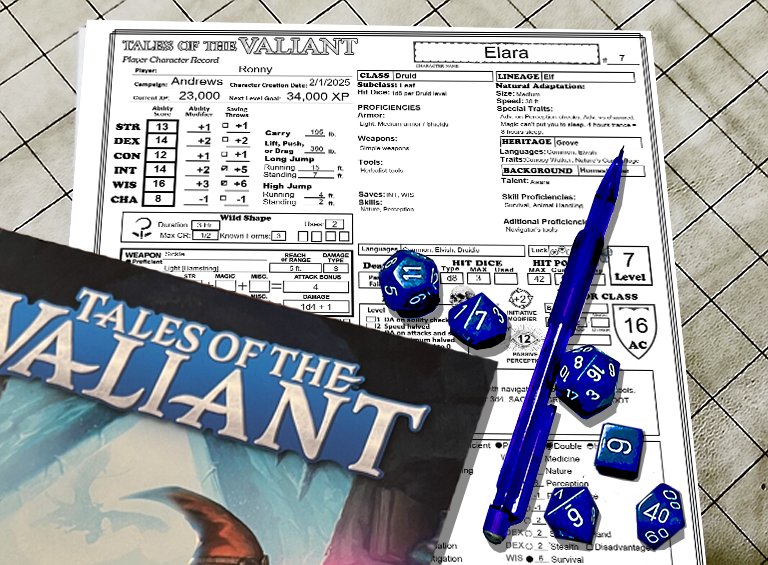
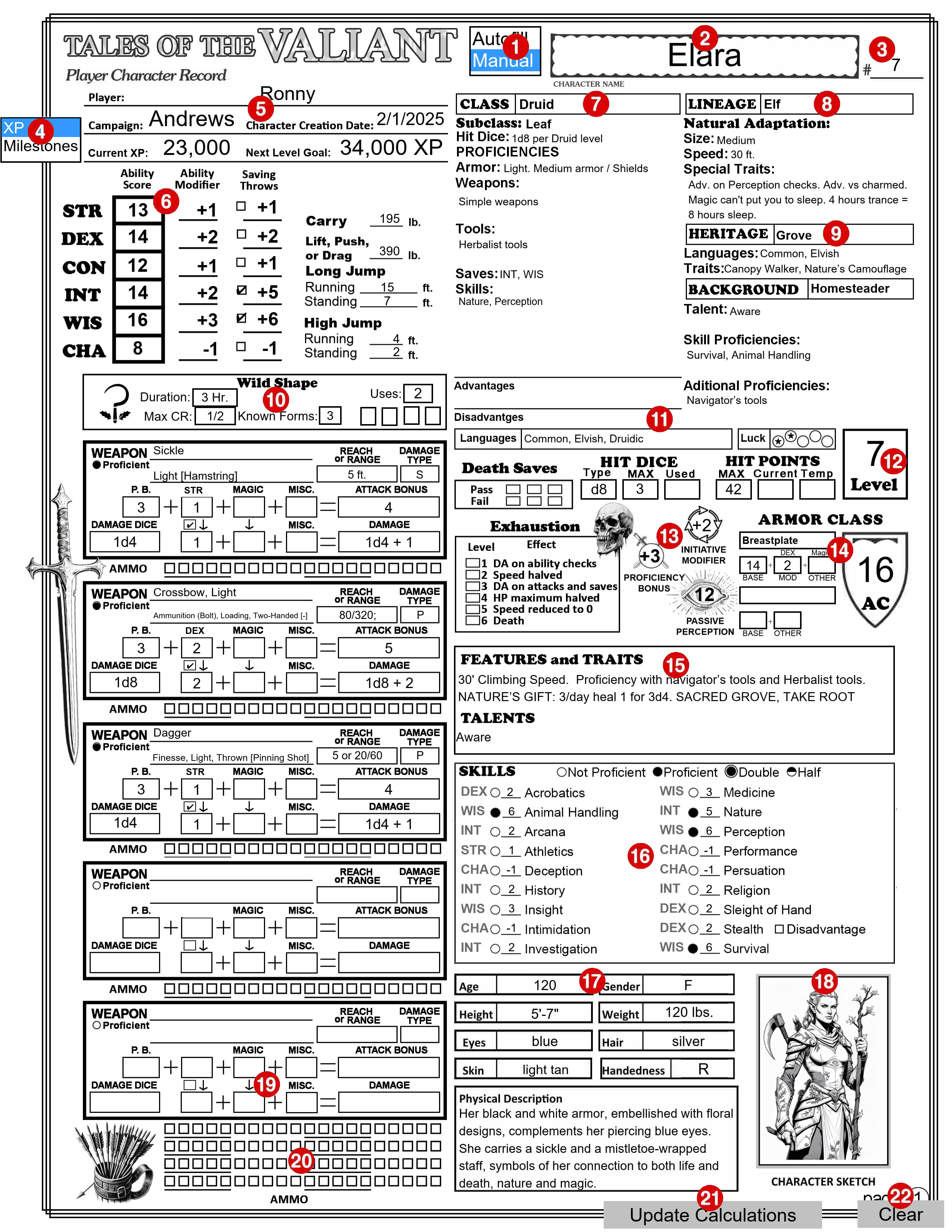














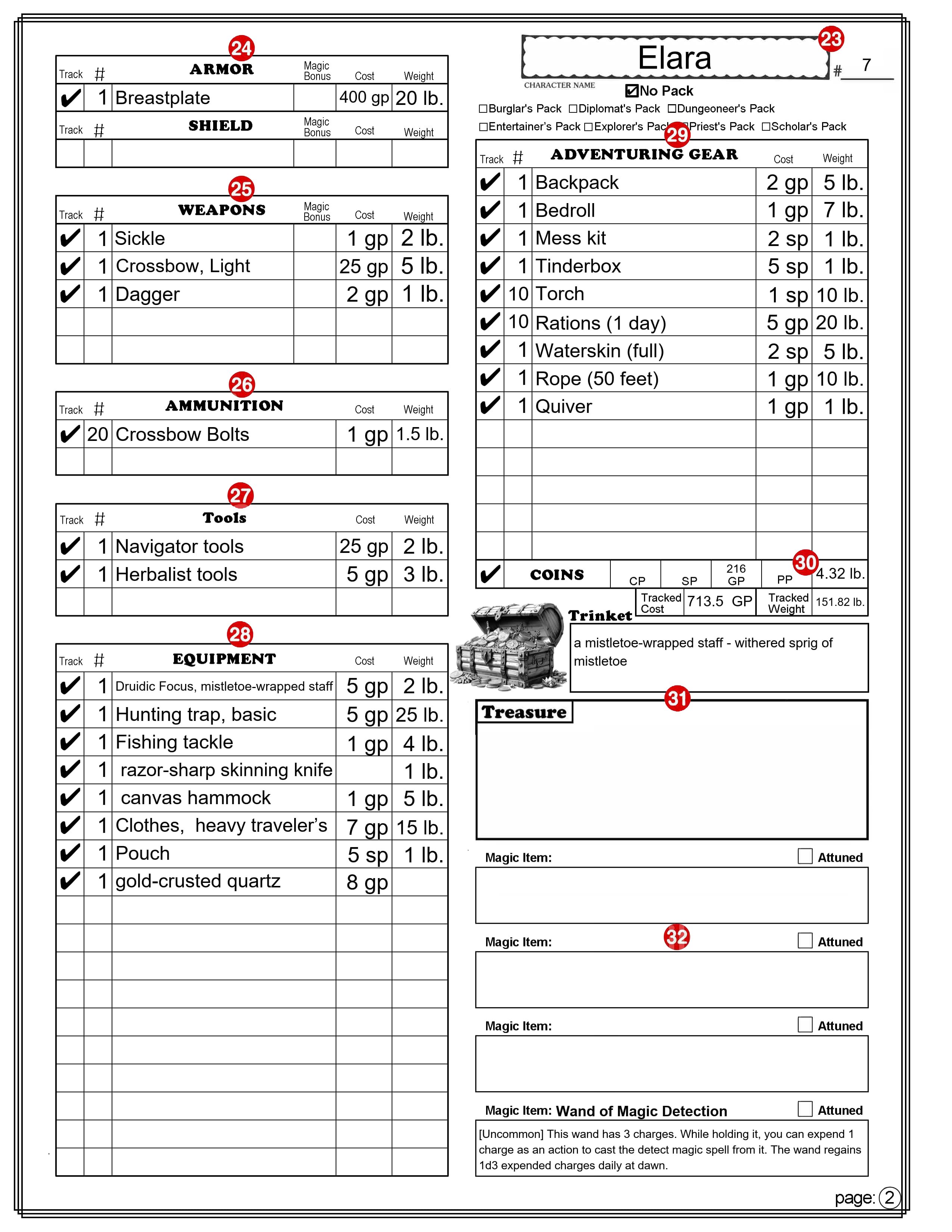
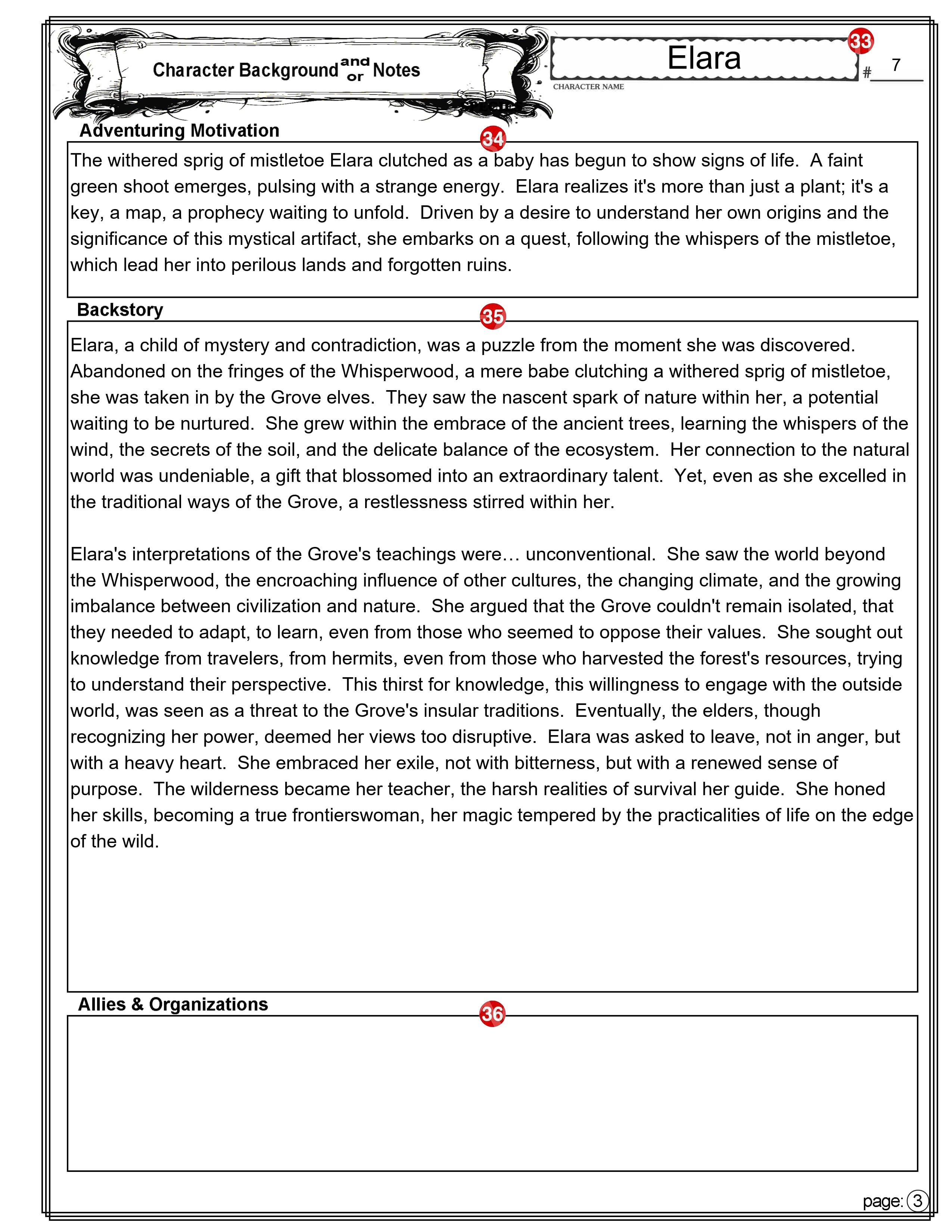
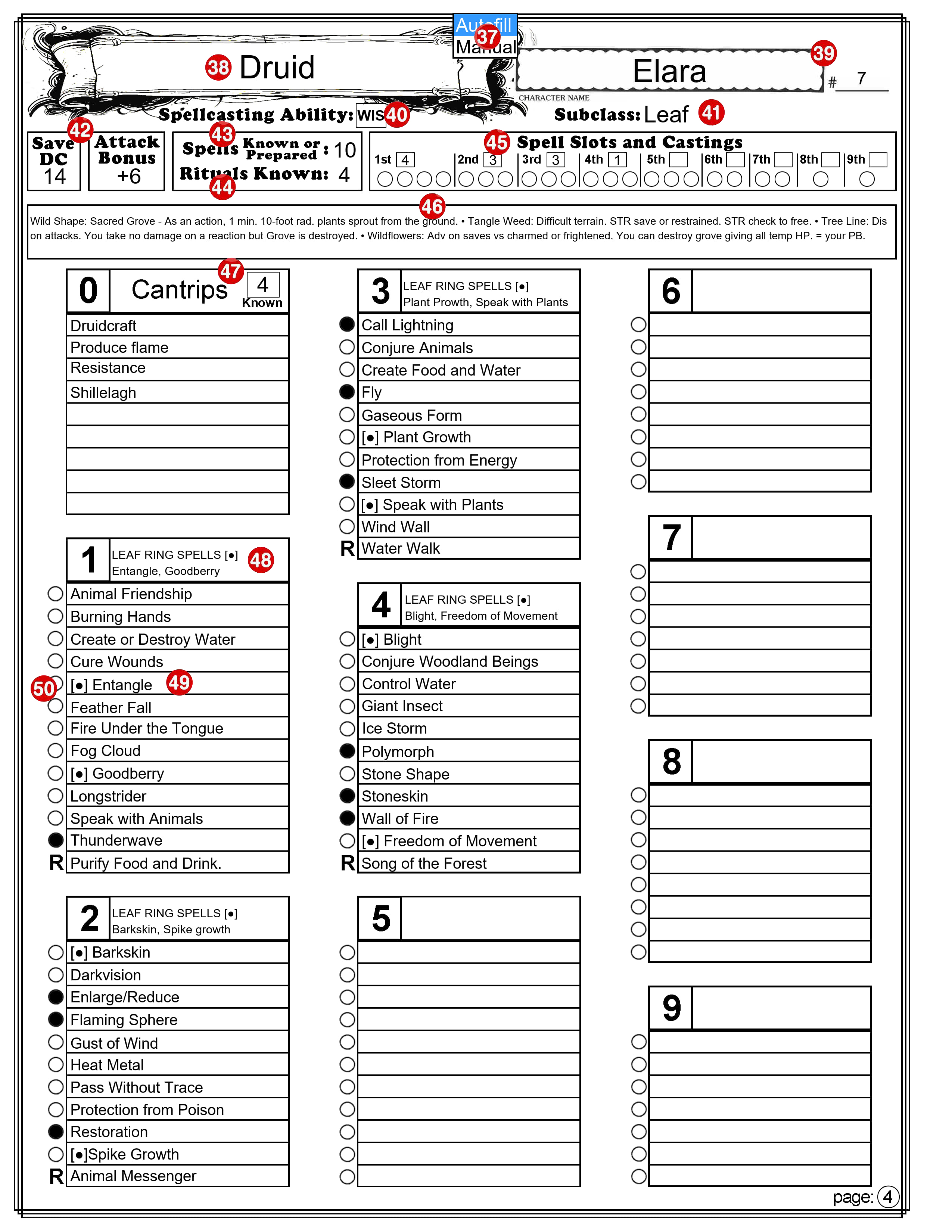















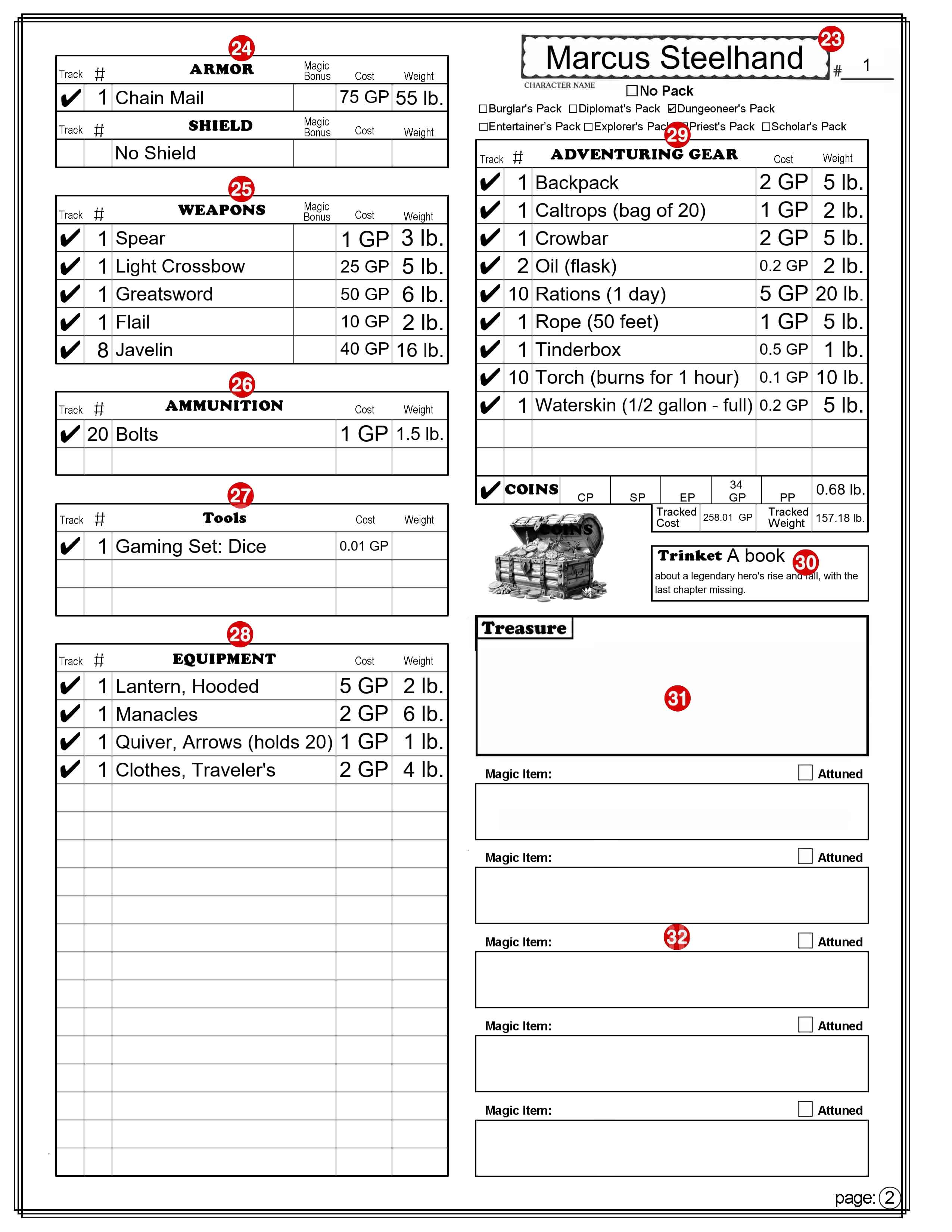
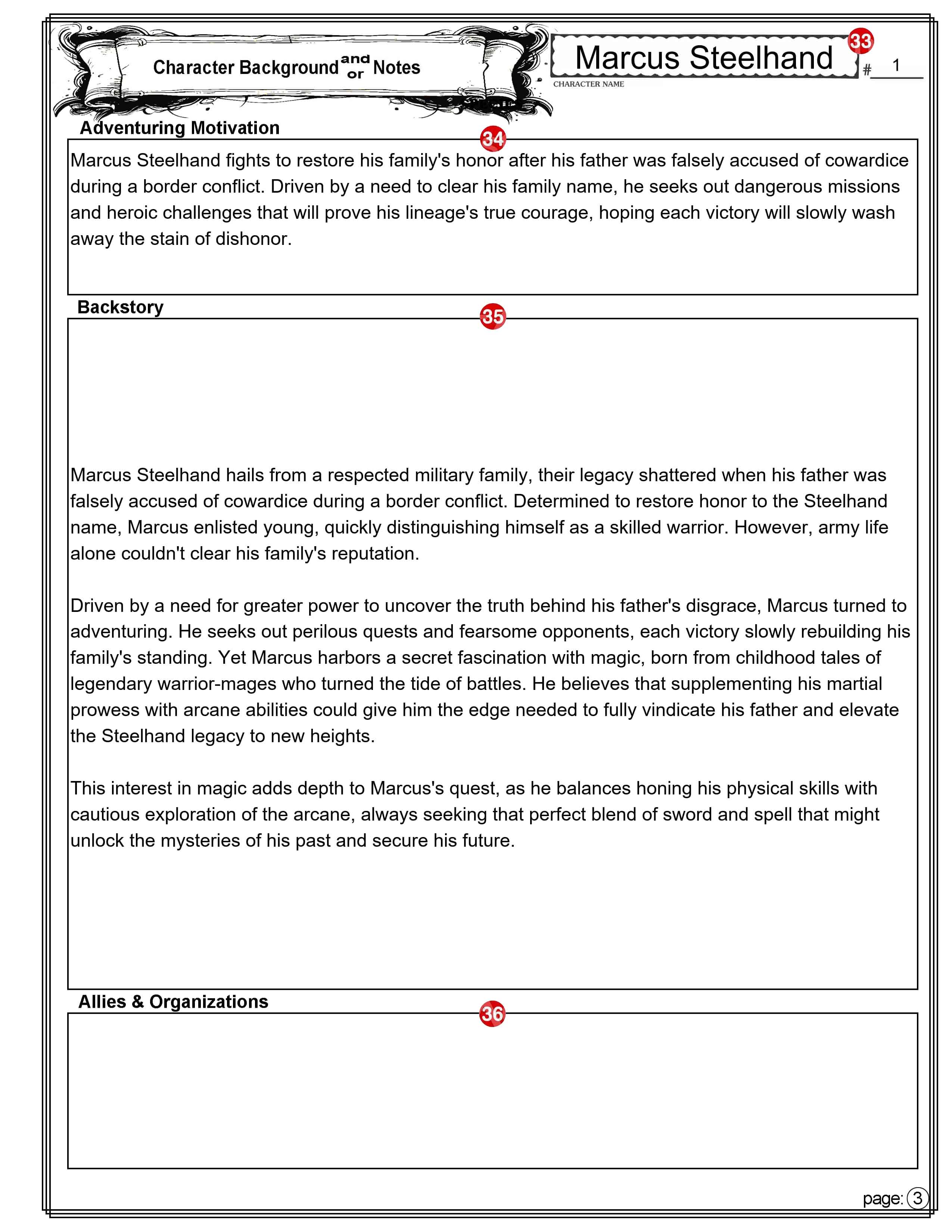
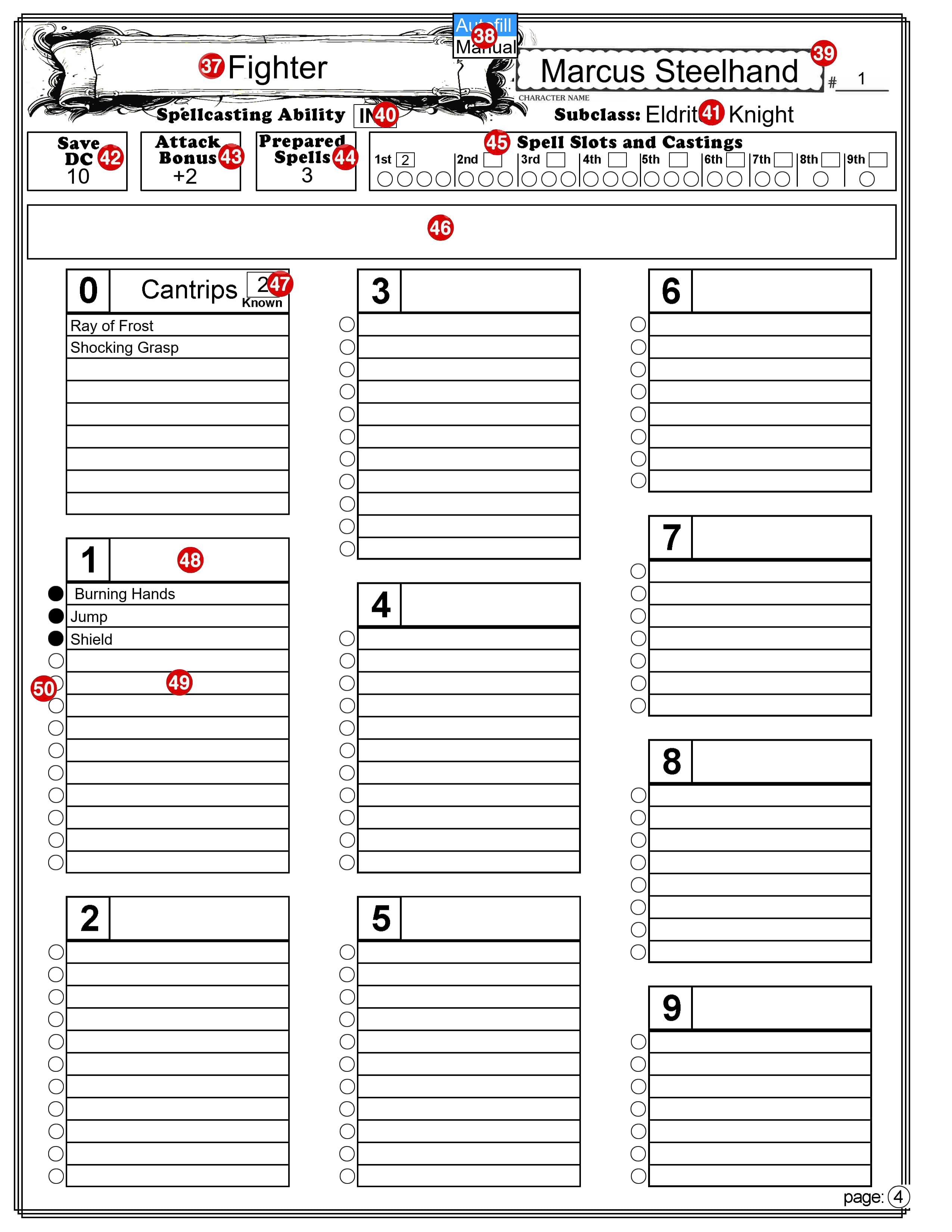




 Dungeon Master Assistance