These new house rules are more streamlined and easier to implement into your game. One problem with the older version is that it contained very little for players who characters weren’t spellcasters, and spellcasters didn’t get very many useful time related spells. So this version includes Time Points, Time Checks, and 71 Chronology spells.
Time Points: A character’s Time Points represent his ability to detect and interact with the timeline. All PCs get Time Points as they advance in level. They can spend them for things like rewinding time to re-roll a d20 (even a death save), or take a different action. Or have some other creature re-roll his attack. You get a chance to regain a lost or spent Time Point after a long rest. Also, as you accumulate more Time Points you gain bonuses to certain ability checks.
Time Checks: These are tied to your Time Points. When the DM has you make a Time Check you roll a d20 and add your Wisdom ability modifier and Time Points to the D20 roll. Several spells require you to succeed on a Time Check or the spell fails.
Chronology Spells: There is no Chronomancy class. If your character is attuned to the flow of time (as represented by your Time Points) and has one or more levels in a class that can cast magic spells, you can add all of the chronology spells to the spell list for that class. Otherwise, none of the spell casting rules for your class are changed. Player characters can add these to their list of spells available to their spellcasting class.
Another problem with any time travelling campaign is that the most useful time travel spells are necessarily high level spells that lower level PCs won’t have access to. This would appear to limit you to high level adventures. To address this I have included many low level spells and I am also working on a series of Time Travelling adventures (an adventure arc) that will take your group from level 1 up through level 20. I am calling it “It’s About Time“. I will be posting these here as they become available. As always, these will be free for you to download and use in your campaigns.
“A generic trademark, also known as a generalized trademark or proprietary eponym, is a trademark or brand name that, because of its popularity or significance, has become the generic term for, or synonymous with, a general class of products or services, usually against the intentions of the trademark’s owner.” (from Wikipedia) I am not a lawyer. This is simply my observation and is not intended as legal advice.
I believe that “Dungeons and Dragons” and “D&D” have become generic trademarks. Just like people may ask for a “Kleenex” when asking for a facial tissue, they often refer to all role playing games as “Dungeons and Dragons“.
Not long ago, when talking to most people, if I said that I played Dungeons and Dragons, they wouldn’t know what I was talking about. In the last five or so years D&D has exploded in popularity and most people know the name Dungeons and Dragons, even if they still don’t know much about it. However, this is the only role playing game they have heard of and may know very little about it. If you play a different TTRPG (table top role playing game) chances are the average person will have never heard of it.
A conversation may go something like this: “I play _______ every Friday evening.” [Fill in the blank with any TTRPG other than D&D.] “What is that?” “It’s a tabletop role playing game”. “What is that?” “It’s like Dungeons and Dragons.” “Oh, I’ve heard of that. Isn’t that where you sit around a table, roll dice and pretend to fight monsters?” “Yeah, kinda.”
To most people, any game where you sit around a table, roll dice, move little miniature people around and pretend that your character is fighting monsters, is Dungeons and Dragons. And, to tell the honest truth, that isn’t necessarily a bad definition. If you tried to tell your friend what the difference is between D&D and your preferred game it would boil down to your preferred rules. But, the rules aren’t necessary to understand what the game is about, and why we love it.
If you, like me, love fifth edition Dungeons and Dragons, there are most likely some rules that you think need to be changed. You may have some house rules that you use to improve the game. You are probably looking forward to the release of the updated rules that are scheduled to be released this year. You trust that WoTC (Wizards of the Coast) will make changes to improve on the existing rules. When they are released, you will probably switch to playing with the new rules, but you will still be playing Dungeons and Dragons. The same happened when third edition and v3.5 was released. It was all still Dungeons and Dragons.
So what is it when another company takes the Dungeon and Dragons rules (as are available to anyone in the SRD for fifth edition) and makes changes to improve on the existing rules? There is an argument to be made that these versions are still Dungeons and Dragons. Several different companies have done this. Some made major changes and some only added to the basic rules and made minor changes. I say that if you are plying any of these games you are still playing Dungeons and Dragons.
Why does any of this matter?
Many people, myself included, are unhappy with Hasbro, WoTC included, for many things they have done over the last 12 months. So much so that we are uncomfortable giving them any of our money. But we love the current version of Dungeons and Dragons. Of course, we could just continue playing the same game we have been playing for the last 10 years, but the idea of a new improved version is very appealing. So all I am saying is that if this describes you, don’t worry. You can upgrade your version of Dungeons and Dragons to a new and improved version without supporting WoTC. Just switch to one created by a different company. It will still be the same game, but will have changes that the authors think are an improvement. That is the same thing that WoTC is going to be doing with their new release.
I think that the easiest new version to switch to, the one that will be the most like the new version of D&D from WoTC but perhaps even better, is the one that is coming soon from Kobold Press that they are calling Tales of the Valiant. But I am tempted to call D&D 6E.
To mark the 50th anniversary of Dungeons & Dragons, the U.S. Postal Service will be issuing a set of 10 official Dungeons & Dragons stamps next year. Just thought you might like to know.
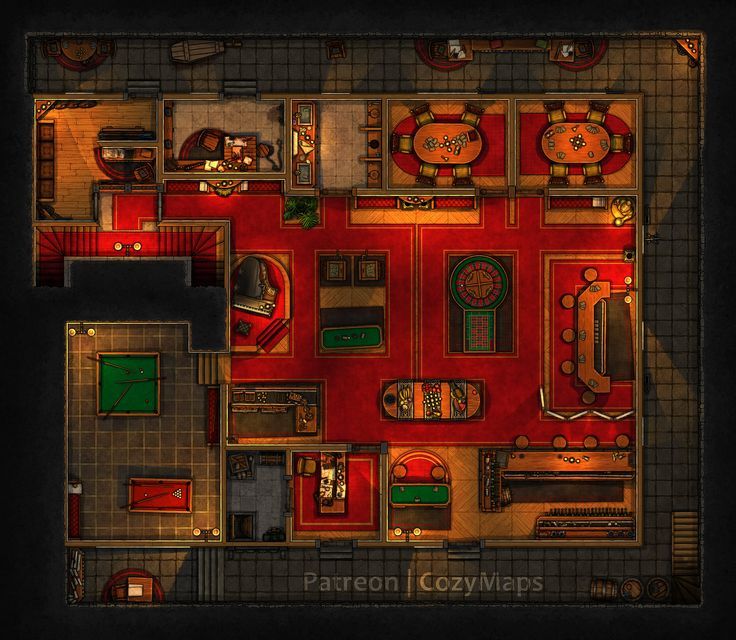
You are running a FRPG (Fantasy Role Playing Game) and the player’s characters have come to the big city. They want to check out the local gambling house. Perhaps try their luck at the tables. But you don’t want to run a whole complicated sub-game. This is for you.
Here is a simple way to determine who wins and who looses and how many gold pieces are won or lost.
The simple method:
The player tells you how much his character is going to bet. Have him flip a coin. [You could have him do this once for the entire day of gambling, or for each bet he makes while there.]
Heads – PC looses all he bet. Tails – PC wins – Roll 1d4 and check this list: 1) PC wins 1.25 X what he bet 2) PC wins 1.5 X what he bet 3) PC wins 1.75 X what he bet 4) PC wins 2 X what he bet
A more complex method:
Player rolls 1d20 and adds his character’s ability bonus. [STR for games like arm wrestling. DEX for games like darts. CON for drinking games. INT for games like dragon chess. WIS for games like poker. CHA for games where the patrons vote to determine the winner.] The house (opponent) also makes a check [add an appropriate bonus determined by the DM. +5 is a good place to start]. Ties go to the house.
Maximum Bets:
Each house will has their own max bet and max payout. An example: Maximum bet 10 gp. Maximum payout on a single bet: 20 gp. Maximum total daily payout: 200 gp.
I haven’t posted much on D&D lately. If you follow this blog you know that after the OGL mess this January I have said that, depending on the Wizards of the Coast’s (WotC) behaviour between now and the time the next version of D&D is released in 2024, and my opinion of that version, I will not be buying any Wizard’s of the Coast products. Here are my latest thoughts regarding this.
I’m still not giving Hasbro [WotC is a subsidiary or Hasbro] any of my money at least until after they release the 2024 version of D&D, if then.
As a side note – they have said that they will not be calling it a new edition but will be referring to the current edition as the 2014 edition of Dungeons & Dragons and the new version as the 2024 edition of Dungeons & Dragons. I agree that, based on the most current play-test, it does look more like a rules update than a new game. For now, I will be referring to it as D&D v5.5
At the current time I like the proposed changes to 5e, but I also like the new game rules that Kobold Press is proposing for their Tales of the Valiant (ToV). The two games will be different from each other, but they will both be based on the current version of D&D with revisions, changes, updates, and new content. They both insist that they will be backward comparable with existing 5e content. So, when the new books come out next year, I have several options. 1) I could ignore both and continue playing 5e. 2) I could believe WotC was censer when they apologized for the Dungeons & Dragons Open Gaming License fiasco, and start using the new v5.5 rule books. 3) I could switch from D&D to ToV or some other RPG (I am leaning toward ToV over the alternatives).
Here are my thoughts:
I am a long time supporter of WotC and I would hate to give up on them by switching to a different gaming company. Hashro’s purchase of them in 1999 didn’t seam to have much effect on WotC until after Chris Cocks became CEO of Hasbro on February 25, 2022. The changes were subtle at first, but they came to a head January this year with the OGL thing.
Hasbro has made it clear that their goal is to get more money from D&D players. They realize that DMs spend much more on WotC products than the players do and they want to get more of the players money. Their plan appears to make D&D primarily an on-line game with the v5.5 Virtual Tabletop (VTT) that they are developing, coupled with D&D Beyond. That way they can charge a monthly fee for each player and offer a lot of customizing options, each of which you can get for a small fee. Even if they make it free for the players to join a game, WotC will still make a lot of money on the micro transactions. And they can offer even more things for the DM to buy, such as 3D objects and tools to create custom 3D dungeons along with animations, special effects, furniture, commoners and monsters.
When I first saw their VTT preview I was excited. It looked great. I thought it would be wonderful to play. But now I am not sure how well that will work for me as a Dungeon Master. First of all I may have to upgrade my PC or get a new one to handle the real time 3D at a decent rate. Perhaps if I stick to playing on-line with adventures that are published by WotC that include all of the 3D maps and monsters, that would work. Especially if it were something like a dungeon crawl where the PCs couldn’t go anywhere off the map. But for me to use it for a home grown campaign or to play one of the many 5e adventures I currently have as a PDF or in a print, the VTT would need to have a 2D ability to draw the encounter map and to import 2D JPG files, something like Fantasy Grounds or Roll20. But if I use their new VTT it will need to be a lot better than the Fantasy Grounds, that I am currently using.
For one thing, I bought a copy of Fantasy Grounds including a copy of the 5e version of the Player’s Handbook, the Dungeon Masters Guide and the Monster Manuel a couple of years ago. This was a one-time purchase which they say will allow me to continue playing with it as long as I want to. With it, for example, I am currently running the “The Age of Worms” adventure path that was published over twelve instalments from July 2005 through June 2006 in Dungeon magazine. I am importing 2D maps that others have drawn and made available on the internet. If the WotC new VTT won’t allow me to do that, I won’t be interested. Also, if there is a monthly fee along with a requirement to link to D&D Beyond with a requirement for another monthly fee for that, those will be strikes against it.
If I decide to not use the new VTT and continue using Fantasy Grounds, I will be surprised if WotC makes a Fantasy Grounds version of the new PHB and MM available for purchase. They seem to be intent on forcing everyone onto their platform.
And, what if I just buy the new D&D 5.5 books, and don’t play on-line or take the time to revise all the rules on my copy of Fantasy Grounds? Up until now, WotC has published Errata for the PHB and others from time to time with corrections and revisions, and include those in the next release of the book. Will they continue to do this? I think that the temptation will to be to make those changes to the on-line versions of those books that you access through the VTT or D&D Beyond and forget about the errata updates. It appears that they are looking at the physical books as only something that collectors will purchase. If they do that, you will only know if you are using the latest rules if you are using Wizards’ VTT, or at least D&D Beyond. I also wouldn’t be surprised if they combine their new VTT with D&D Beyond at some point.
Another thing – when you “buy” a book on D&D Beyond you are not actually buying anything. What you are doing is paying for a “license” to access a copy of that book when you log onto their web platform. If the site goes down, or the company goes out of business, or they simply decide to change the wording of the conditions that you accepted when you clicked on at the bottom of the pages of text that you never read when you “bought” the book, then you will no longer have access to it. If you think that could never happen, look at what they tried to do with the OGL. There is no reason to think that everything that you “buy” on their VTT will be any different. As an example of what they could do instead: A copy of the Fantasy Grounds program exists on my hard drive. When I run it, it links to their on-line site, but it would run even if I were disconnected from the internet. When I purchased Fantasy Ground versions of the D&D books, I downloaded copies of them onto my hard drive. These are similar to PDF files, except they can only be opened with the Fantasy Grounds program, and all the rules, monsters, NPCs, etc. that they contain are available for me to use in Fantasy Grounds. I regularly backup the folder that they are in. Whenever I update Fantasy Grounds, it checks to see if anything else that I have purchased has been updated and will replace them with the newer versions. If Fantasy Grounds were to disappear from the internet, for any reason, I could still link to others site-to-site and continue to play with everything I have purchased. WotC could do something similar if they chose to.
So what am I going to do?
Well, it depends. ⚫ If either v5.5 or ToV becomes obviously head and solders better than the other, I will probably use that one. (I will post a side-by-side comparison once they are both published.) ⚫ If the v5.5 books are not available for Fantasy Grounds, I will probably switch to ToV. I have already supported their Kickstarter and included purchase of the Fantasy Grounds versions of the books.
As I mentioned previously, depending on the Wizard’s of the Coast’s behavior between now and the time the next version of D&D is released in 2024, and my opinion of that version, I will not be buying any Wizard’s of the Coast products.
This is a revised re-post from 2016 with updated links.
In 2004 and 2005 Skip Williams (co-creator of Dungeons & Dragons 3rd Edition) put a series of articles on the Wizards website with tips on playing each of the various character types. Wizards of the Coast has removed them from their site but I found these copies thanks to Orbitalflower’s “Wizards.com D&D 3.5 archive”, which has already done all of the work finding the links on the Wayback Machine.
These are an excellent reference. They were written for D&D 3.5 but even if you are running a fifth edition game you will find then a useful reference.
This is one of several reviews I am doing this year of various table top roll playing games. I am specifically comparing them to D&D 5e. I am doing this with the assumption that my readers are already familiar with D&D 5e. The following review is based only upon my reading of the rulebook. I haven’t played this yet, but I will be posting my opinion after I get a chance to play test it.
I am referring here to the fifth edition of Dungeons and Dragons as 5E and to Five Torches Deep as FTD. This information is for evaluation purposes, it should not be considered official rules of the game. You can assume things that I don’t list here are basically like 5E with only minor differences.
In FTD the Dungeon Master is called the Game Master.
Summary of the game system
According to the FTD rulebook “FTD is meant to ease the introduction of OSR (old-school renaissance or revival) mechanics and principles to those familiar with 5e. The classes and monsters are (largely) compatible with 5e, and can be plugged in and out as you see fit. The more FTD you add, the more “OSR” it feels.”
Primary differences between Five Torches Deep and D&D 5e
Character Creation
Pick race: Human, Dwarf, Elf or Halfling: Each race has a different way to determine ability scores, and has ability requirements by class. Races have no other mechanical impact.
Roll Abilities:
Humans roll 3d6 in order: STR, DEX, CON, INT, WIS, CHA. Swap up to two.
Dwarves CON and STR are 13. Then roll 2d6+3 in DEX, INT, WIS, CHA order.
Elves DEX and INT are 13. Then roll 2d6+3 in STR, CON, WIS, CHA order.
Halflings WIS and CHA are 13. Then roll 2d6+3 in STR, DEX, CON, INT order.
Pick class: Warrior, Thief, Zealot, or Mage
Humans have no class restrictions. Other races have a minimum 13+ ability requirement to be certain classes.
Define or pick equipment : For example, as a Warrior you get the armor of your choice, a shield, 2 one handed weapons, 1 two handed weapon, a smith’s kit, a healer’s kit, 5 rations, 3 rolls on the sundries table, and additional supplies based on your INT score.
Decide on supplies carried and determine total load: Refer to “Supply and Load” below.
Pick spells if applicable: Zealots and Mages get 3 cantrips and 1 spell at first level. The number and level of the spells known increase as the character advances in level. Refer to “Magic and Spell Casting” below.
Fill out your character sheet: Fill in your character’s name, hit points, etc.
Classes and Archetypes
Upon reaching third level you choose one of three archetypes.
The Warrior Class chooses Barbarian, Fighter or Ranger
The Thief Class chooses Assassin, Bard or Rogue
The Zealot Class chooses Cleric, Druid or Paladin
The Mage Class chooses Sorcerer, Warlock or Wizard
Each Archetype has a simple set of abilities and features. As an example, here is the entire description of the Warlock Archetype.
You gain your proficiency bonus to profane magic, intimidate, and stealth related checks.
You gain one of these features at level 3 and 7:
Wear light armor
Martial proficiency
Adv to intimidate
No need to eat
Darksight
Sacrifice: damage self (max lvl) to gain an equal bonus to next damage
Equipment – Supply and Load
Items and weight are tracked in terms of load. Each item the size of a human head or 5 lbs is considered 1 load. PCs are able to carry load equal to their STR score without issue.
Each PC has supply (SUP) up to their INT score.
Five SUP is one load. SUP is rounded to the nearest 5 per load (e.g. 14 SUP is 3 load, and 11 SUP is 2 load).
Heavy armor is 5 load, light armor is 2 load. Items and weapons are 1 load each hand used when holding or wielding that item.
There are 18 items (other than 3 armors and 19 weapons) with their SUP costs to replace or refill them. There is no listed cost but their cost is usually 1 gp per SUP.
Weapons and Armor have a durability score. Whenever there is a critical failed save, or a critical success attack, the item loses one durability point. When it reached 0, it is destroyed.
There are rules for repairing and crafting equipment.
XP and character level advancement
Experience Points
XP is gained primarily for treasure (in gold pieces).
Leveling Up
The class levels range from 1 to 9.
Combat
Each round of combat
Initiative: Each character and monster acts in order of their DEX score, highest going first.
Actions: Each combatant gets 3 actions.
Movement action: you can move up to your speed (usually 30’). You can split up this distance throughout your turn.
Active action: most proactive actions that require a check (stealth, attack, cast).
Quick action: brief actions, actions triggered off others, anything that takes a second.
Healing and Death
Natural Healing: Characters recover 1 hit point of damage for every night of rest, or 1 HP for each character level for each night of rest in a safe place.
Stabilizing & Injuries: If your character isn’t stabilized within one minute, he is dead. Once stabilized, by companions ability check, magic, or otherwise, you must roll a d20 on the Injury Table. On a 1 you are dead. On a 20 you are standing and heal 1d8 HP. All other rolls result in something bad – ranging from disadvantage on ability checks to looing a body part.
The Spells: Spell go from level 1 to level 5, and cantrips. All of the spells and their descriptions are presented on two pages – one for Devine spells and one for Arcane spells. For each there are exactly 5 cantrips, and 5 of each level spell. For an example, here is the entire description for the third level Arcane spell Furyfire: “All (including allies) in 20’ area take 1d6/lvl damage. Atk”
Spell Preparation: You don’t have to prepare spells. You can attempt to cast any spell you know whenever you would like.
Spellcasting Checks: Spells require a spellcasting check with a DC = 10 + spell’s level. Failure triggers a mishap rolled on the Magical Mishap Table.
Other Rules and Tools
There are rules for Converting and Building Monsters, Acquiring and using Retainers, Morale, Chases, and Retreat. There is also a nice section on overland and overwater travel.
What you need to get started
All you need is the rulebook. You can find FTD on DriveThruRPG in both PDF and softcover print-on-demand. It is only 49 pages and 13 of them are full page graphics.
Final Thoughts
No Darkvision – some monsters have darksight and a Warlock can get it as their feature on reaching level 3 or level 7.
FTD must assume that you are using 5e as a reference for many things.
Weapons and equipment. For example, it says that chainmail has a duration value of 3 and says that the 3 armor types are heavy, light and shield, but doesn’t say anywhere which armor type chainmail belongs to.
It states “5e and OSR spells can be used as written, per their spell level (with max usable spell level 5)”.
Monsters. There is one page with 6 sample monsters, and rules for creating or converting existing monsters.
There are places in the book that refer to other pages by page number, but there are no page numbers printed on the pages.
No Alignments
No Backgrounds
No skill system – no ranks or skill points
No opportunity attacks
No inspiration
No death saves
I bought the PDF, but I don’t think I will playtest this one. In attempting to strip 5e down to its basics it has also inserted some new rules of its own. As an example, the equipment Supply and Load rules are a good attempt at streamlining encumbrance, but it introduces a brand new confusing system. If you already know the 5e rules, you can make Five Torches Deep work, but if you are new to table top role playing games, these rules alone would not be sufficient to play their game. It’s not much like the older versions of D&D and if you are just looking for a simpler version of 5e you should check out my D&D 5E – Simplified Rules.
This is one of several reviews I am doing this year of various table top roll playing games. I am specifically comparing them to D&D 5e. I am doing this with the assumption that my readers are already familiar with D&D 5e. The following review is based only upon my reading of the rulebook. I haven’t played this yet, but I will be posting my opinion after I get a chance to play test it.
I am referring here to the fifth edition of Dungeons and Dragons as 5E and to Basic Fantasy Role-Playing Game as BFRPG. This information is for evaluation purposes, it should not be considered official rules of the game. You can assume things that I don’t list here are basically like 5E with only minor differences.
In BFRPG the Dungeon Master is called the Game Master.
Summary of the game system
BFRPG is a popular game created by Chris Gonnerman. It is based on the D20 System that was first introduced in the third edition of D&D where a player rolls a 20-sided die, adds modifiers, and if the result is greater than or equal to a target number it succeeds. But in most every other way it more like the D&D game we had in the 1980’s.
Primary differences between Basic Fantasy and D&D 5e
Character Creation
Roll Abilities: Roll 3d6 for each in order. [same 6 abilities as in 5E]
Ability Score Modifiers: Slightly different from 5E, ranging from -3 for a score of 3, to +3 for a score of 18.
Choose a race and class: Refer to those sections below.
Hit Points: Roll appropriate hit die, adding your CON bonus or penalty. [Like 5E]
Saving Throws: Saving Throws are set based on your character’s class and level. You have a saving throw number for: Death Ray or Poison, Magic Wands, Paralysis or Petrify, Dragon Breath, and Spells.
Attack Bonus: Your attack bonus is between +1 and +10, depending on your class and level.
Known Languages: This includes “Common” and your character’s racial language (if other than human) plus number of languages equal to your INT bonus.
Starting Gold: Everyone starts with 3d6 × 10 gold pieces.
Purchase Gear: Purchase your equipment from the equipment lists.
Armor Class: Determined by your armor and DEX.
Name Your Character: Give him or her a name and you are ready to play.
Races
Dwarf, Elf, Halfling, and Human
Restrictions: For non-human races there are minimum (and maximum) ability requirements and limits to which classes they can be.
Classes
Cleric, Fighter, Magic-User, and Thief
Combination Classes: An Elf can be a Fighter/Magic-User or a Magic-User/Thief.
Restrictions: Each class has a minimum ability score (its Prime Requisite) and a restriction on what armor and weapons they can use.
Each class has its own level progression table that shows for each level: XP required, Hit Die, and if the class casts spells, it also shows the number and level of spells you can cast at each level.
Thief Table: Thieves have a table that shows the percent chance of being able to perform certain tasks, depending on your level. These are: Open Locks, Remove Traps, Pick Pocket, Move Silently, Climb Walls, Hide, and Listen.
XP and character level advancement
Experience Points
XP is gained for monsters defeated, and for other challenges as the GM sees fit.
Leveling Up
The class levels range from 1 to 20.
Each class requires a different number of XP to advance to higher levels.
Combat
Each round of combat (10 seconds of game time.):
Surprise: When surprise is possible, roll 1d6 for each side which might be surprised; most normal characters are surprised on a roll of 1-2. Surprised characters are unable to act for one round.
Monster Reactions: If it is not obvious what the monster will do, the Game Master rolls on a table to determine how it will react.
Initiative: Each character and monster rolls 1d6 at the start of each round. A combatant can choose to wait for another character or monster to act.
Ties: Both sides act simultaneously. (This means that both your character and the monster he is fighting might die!)
Reach Weapons: A character using a weapon with a long reach may choose to attack a closing opponent on the closing opponent’s number and thus attack simultaneously with the opponent.
Movement:
If not in melee combat: You can run (move at double your normal encounter movement rate).
When in melee:
Engage: You may move up to your encounter movement distance and attack.
Fighting withdrawal: You can move backwards at up to half your combat move rate.
Retreat: You turn and flee, moving up to your combat movement rate. This round you may not attack; your opponent gains a +2 bonus to all attacks against you.
Other movement rules: BFRPG has rules for Maneuverability, Climbing/Diving, Charging, and Evasion/Pursuit.
Attacks: Attack rolls are handled similar to 5E. You add your attack bonus and your STR modifier (or DEX modifier) to your d20 roll. If it matches or exceeds your opponent’s AC you hit. Nat “20” always hits (but no bonus damage). Nat “1” always misses.
Melee attacks:
Must be within 5’ unless you are using a reach weapon.
Attacking From Behind: BFRPG has rules for facing. Attacks from behind receive a +2 attack bonus.
Missile attacks:
Within 5 ft.: –5 penalty to attack rolls. Unless you are behind the target creature and undetected; in this cases, apply the usual +1 bonus (+3 total bonus if attacking from behind).
Short range: +1 bonus to attack rolls.
Medium range: No bonuses or penalties.
Long range: –2 penalty to attack rolls.
Rate of Fire:
Most Missile Weapons: Can be fired once per round.
Light Crossbow: Can be fired just once per two rounds.
Heavy crossbow: Can be fired just once per three rounds.
Spell attacks:
Casting a spell usually takes the same time as making an attack.
Disrupting Spells: If you are attacked or must make a saving throw on the Initiative number on which you are casting a spell, the spell is spoiled and lost.
Healing and Death
Natural Healing: Characters recover 1 hit point of damage every day, provided that normal sleep is possible. Characters who choose full bedrest regain 1 additional hit point each evening.
Death: The rules state that, at zero hit points, the character is dead. If this is too harsh for you, BFRPG provides these options:
Raise Dead: Arrange matters so that characters killed in an adventure can be easily raised (but at a substantial cost).
Save vs. Death Ray: If the save is made, the character remains alive for 2d10 rounds; if the character’s wounds are bound (or they receive healing magic) within this time frame, death is averted.
Medical Treatment: Binding the wounds stabilizes them at zero hit points. Non-magical healing will require a full week to restore the first hit point; after this, healing proceeds at the normal rate.
Negative Hit Points: Keep track of the current negative hit points. At the end of each round, the character loses an additional hit point. At -10 the character is dead. Before this, binding their wounds or receiving magical healing will stabilize the character.
Magic and spell casting
Spellcasters: Only Clerics and Magic-Users can cast spells.
Number of Spells: The daily number of spells of each level that they can cast depends on the character’s level.
Spell Preparation: Each morning spellcasters prepare spells to replace those they have used.
What you need to get started
“Don’t Buy These Books! Not yet, anyway. The Basic Fantasy Role-Playing Game core rules, along with a broad variety of additional materials, is given away for free in PDF form on our website, http://www.basicfantasy.org. Please, before you buy anything, go over there, download the PDF and take a look. …. Please note, I make nothing from the sales of this book. The works shown here are sold at cost. Don’t buy thinking that you are rewarding me… only buy if it suits your needs. Thank you!”
Chris Gonnerman, Author, Basic Fantasy Role-Playing Game
You only need the core rule book to play, but there are also free supplements and modules available.
Note regarding the 4th Edition of Basic Fantasy Role-Playing Game:
This will be the first edition to be distributed under the terms of the Creative Commons Attribution-ShareAlike 4.0 International License. The 3rd Edition and earlier, was distributed under the terms of the Open Game License version 1.0a. They appear to currently be in the process of making revisions as needed to fully implement this transition. The most current books currently available in print are 3rd edition. As of this date (April 5, 2023) the latest 4th edition version is only available as a PDF download.
Update (June 2023):The 4th Edition of BFRPG is now available in print; head over to http://www.basicfantasy.org and click the Buy The Rules button at the top to get a list of sources.
Final Thoughts
No Alignments
No Backgrounds
No Advantage/Disadvantage
No proficiency bonus
No feats
No cantrips
No spell slots
No spell components
No sub-classes
No skill system – no ranks or skill points
No opportunity attacks
No inspiration
No death saves
I like it. Basic Fantasy is a very rules-light game system. It has stripped D&D back down to the basics while keeping the D20 mechanics that make it easier to play than the old THACO system. If you want to add some things to make it more in line with 5E you can download supplements to add additional classes, races, 0 level spells, alignments, background skills, secondary skills, and more. There is even “The Fine Art of Monster Conversion” supplement you can use to convert monsters to BSFRPG.
Comparing Dungeons and Dragon to Castles & Crusades.
This is one of several reviews I am doing this year of various table top roll playing games. I am specifically comparing them to D&D 5e. I am doing this with the assumption that my readers are already familiar with D&D 5e. The following review is based only upon my reading of the rule-book. I haven’t played this yet, but I will be posting my opinion after I get a chance to play test it.
Below I am referring to the fifth edition of Dungeons and Dragons as 5E, Castles & Crusades as C&C, and the Player’s Handbook as the PHB. The information below is for evaluation purposes, it should not be considered official rules of the game. Where C&C uses different terminology than D&D, I will tell you what terms C&C uses but will use D&D terms in the descriptions. You can assume that things I don’t list here are basically like 5E with only minor differences.
In C&C the Dungeon Master is called the Castle Keeper.
Summary of the game system
C&C is a popular table top role playing game published by Troll Lord Games that uses a modified d20-based system they call the SIEGE engine. It is a table top fantasy role playing game based on the D&D 3.0 system but it has an AD&D feel.
Primary differences between C&C and D&D 5e
Races
You can choose to play a Dwarf, Elf, Gnome, Half-Elf, Halfling, Half-Orc, or Human.
These are basically the same as in 5E, but they have more features and there are no sub-races.
Darkvision [Gnomes and Half-Orcs] & Deepvision [Dwarves]: Darkvision extends 60’ and Deepvision extends 120’. Neither can be used near a light source. They both require one minute before you can use it when the light source is extinguished.
Twilight Vision [Elves]: Can distinguish color and detail under starlight, moonlight or torchlight for up to one mile but only if they are outside.
Dusk Vision [Halflings]: Can see in starlight and moonlight just as a human can at dusk.
Classes
Your character can be an Assassin, Barbarian, Bard, Cleric, Druid, Fighter, Illusionist, Knight, Monk, Paladin, Ranger, Rogue, or Wizard.
There are no sub-classes. Generally, the number of features that you get with your class doesn’t increase as you advance in level. Some features increase in power at certain levels.
Some classes advance in level faster than others because the number of hit points required is based on you class.
A character may wear any armor, but if the armor type does not appear in the list for their class, the character cannot use any of their class features while the armor is worn unless the description of the feature states otherwise.
Multiclass [optional rule]
The decision to multiclass must be made at level 1.
You can combine any two classes (any 3 classes if your character is human).
There are rules and charts to determine an average for things like starting gold and hit dice.
You get all of the features for each of the classes.
You are considered a single class and advance in levels as a single class.
The XP required to advance in level is calculated by adding together the XP required for each class plus an additional amount that increases with each level.
Class and a Half [optional rule]
The decision to have a class and a half must be made at level 1.
Pick a principle class and a supporting class.
Experience points needed for level advancement are determined by adding the XP of the principal class to one half the XP of the supporting class.
You will advance in the supporting class, and perform skill checks of that class, at half the rate of the principal class (rounded down).
There are some additional restrictions including restrictions on some features for each of the secondary classes.
Abilities [Attributes in C&C]
Ability Scores: C&C and 5E both use the same 6 ability scores.
Ability Modifiers: Each ability has a corresponding ability modifier. These numbers differ only slightly from 5E.
Primary Abilities: You assign one to be a “primary” ability based on your class. Then you select 1 or 2 other prime abilities. The others are considered secondary abilities.
Proficiencies: C&C doesn’t have proficiencies. Instead, in addition to your ability modifier you add your character’s level and racial bonus (if any) to your ability checks.
Difficulty Class (DC) [challenge level in C&C]
For ability checks, the Castle Keeper sets the DC which usually ranges between 0 and 10. He then adds 12 if the PC is using a primary ability or 18 if he is using a secondary ability .
Character creation
Roll abilities, choose a class, select primary and secondary abilities (see above), chose a race, choose an alignment, choose a deity (optional), roll starting money, purchase equipment, determine hit points, and give your character a name. These are all basically the same as in 5E except as noted below.
Roll Abilities: Roll 3d6 six times and assign to abilities as desired.
Starting Gold: The amount you start with is determined by a dice roll based on your class.
Purchase Equipment: Purchase your weapons, armor, etc. from the equipment lists.
Armor Class
Unarmored: AC 10 [like 5E]
Touch: AC 10 regardless of armor worn.
Armor: Each armor type has a specific AC adjustment which is added to your unarmored AC. Example: Leather armor is +3 so your AC would be 13.
Shields: There are 8 different shields.
Bucklers, small steel and small wooden shields: Add +1 to AC against 1 foe each round.
Medium steel or wooden shields: Add +1 to AC against 2 foes each round.
Large steel or wooden shields: Add +1 to AC against 3 foes each round.
Pavis: Made to be rested on the ground and fired over, like a mobile wall. Adds +6 to AC against all foes in front of the shield.
Helms: There are 5 different helms which provide different AC bonuses from +2 to +7. This is used instead of any other armor or shield to blows directed at your head.
Dexterity: Your DEX modifier is added to your AC if you can physically react to an attack.
Combat
Combat Round: 10 seconds.
Initiative:
The initiative die is a d10
Initiative is rolled each round.
Exception to initiative: In the first round only, a creature using a weapon with a reach of greater than 10 feet against an opponent with a weapon with less than a 6 foot reach, or a large creature fighting a medium or smaller sized creature, attacks first if the other creature approaches within ten feet.
Actions:
On your turn in the round, you can move, attack, cast a spell, use a class feature [class ability in C&C], use an item, or perform a non-lethal or some other mundane action.
Move:
You can move 1/2 your speed [move rate in C&C] and still attack. If you take no other action, you can move your speed, or twice your speed (jog), or 4 times your speed (run).
Charging:
You can move up to double your speed and then attack. A successful charge attack adds +2 to damage, but you have a -4 penalty to your AC for the entire round.
Melee Combat: Basically the same as 5E.
Ranged Combat:
Your STR modifier is added to the damage of thrown weapons and your DEX modifier of propelled weapons.
Range weapons have a close range listed. Attacks made at twice that (medium range) have a -2 on the attack roll, at 3 times that (long range)] are at -6.
If you miss, there are rules for possibly hitting something else in the path.
Unarmed Combat:
There are rules for grappling, pummeling, overbearing, and touch attacks.
Magic and spell casting
Types of Magic: In addition to arcane magic and divine magic, C&C also had illusion magic that is only casts by Illusionists.
Casting Spells: Spells are cast the same way they are in 5E.
Spell Slots: Basically the same as in 5E. The spell levels go up from level 0 to level 9. At each class level you get more spells, and higher level spells, than you do in 5E.
Level 0 spells: These are like cantrips but you don’t get unlimited castings of them.
Acquiring and preparing spells: Basically the same as in 5E.
Concentration: If something interrupts the character’s concentration while the character is casting, the spell is lost and marked off the character’s list of prepared spells.
Saving Throws: The DC to save against a spell is always the spell caster’s level.
Spell Focus: If a special focus or divine focus is required, it is unique to the spell and cannot be used as the focus for other spells.
Spell descriptions: Each spell is clearly described and easy to use. There is no option to cast a spell at a higher level.
You can download the Quick Start Rules for free that includes a one-shot adventure and pre-rolled characters.
There is a free official C&C character sheet.
There is a free official D&D 5 to C&C conversion document .
If you decide you want to run a C&C campaign, two books (Castles & Crusades Players Handbook, and Castles & Crusades Monsters & Treasure) get you all you need to play up to level 12.
You will want to have the Castle Keeper’s Guide for higher level play.
Final Thoughts
Ability checks don’t scale well at higher levels.
Setting the DC for ability checks could be made much simpler. You could set the challenge to between 12 and 22 in the first place and simply have the player add +6 to his roll if he is using a primary attribute.
This is a newer style of game that still feels like AD&D.
I like it (mostly). I will have to see how some of this plays at the table.







 Dungeon Master Assistance