Dungeon Master Assistance

Where anyone over 18 can share thoughts and ideas on RPGs.

Category Archives: House Rules

D&D 3.5 – Replacing Attacks of Opportunity

Wizards of the Coast admits on their website that “Arguments about attacks of opportunity happen frequently.” I seriously considered eliminating them altogether, but that creates problems of its on. For instance, in D&D v3.5 there is nothing other than attacks of opportunity (AoO) that would prevent a hero from walking past a row of armed guards to get to the wizard they are protecting. My proposal to eliminate AoO and to simplify combat is this: Don’t allow anyone to pass through a threatened square. Also, don’t allow anyone to perform non-attack actions within a threatened square. That is too simple, of course, so we will allow you to do any of these things if you make a successful ability check – what I call a “heroic action.” Below is from my Dungeons and Dragons Lite house rules.

There are no Attacks of Opportunity. Ignore all references in the PHB to Attacks of Opportunity and use this rule instead.

Definition of a threatened square: A creature threatens all squares into which it can make an armed melee attack.

In a combat round your character can enter or exit a threatened square, but you must use a heroic action to enter and then exit (pass through) one or more threatened squares. (Refer to my previous Heroic Actions post.)

While within a threatened square the only thing you are allowed to do is attack with a melee weapon you have in your hand. Anything else you may want to attempt will require a successful heroic action check.

WITHIN A THREATENED SQUARE
Some of the things that require a heroic action to accomplish while within a threatened square are:

  • Attack with (or load or prepare to attack with) a ranged weapon, including splash weapons
  • Cast a spell, read a scroll, drink a potion or apply an oil
  • Pick up, retrieve, draw or store an item (including weapons)
  • Deliver a coup de grace
  • Escape from a net or any other entanglement
  • Light a torch or perform any other non-combat activity other than speaking

MODIFIER: Dex modifier
DC MODIFIER: +5
SUCCESS: You can attempt the desired action.
FAILURE: You loose your turn.

MOVING THROUGH THREATENED SQUARES (a move action)
As part of your move action, you enter into a threatened square and proceed out the other side. You may want to use this to get past armed guards to reach the magic user they are guarding, or to attack someone armed with a reach weapon.
MODIFIER: Tumble modifier
DC MODIFIER: +5, +2 for each additional opponent after the first one
SUCCESS: You tumble through the threatened squares. Your move rate for your entire move is 1/2 your normal move rate.
OPTIONS: Add +2 to the DC to move at your normal move rate.
FAILURE: Failure results in your move ending inside the first threatened square you enter.

Note regarding reach weapons: When your opponent is using a reach weapon, you must use a heroic action to pass through a threatened square in order to attack him. Otherwise, your move must end when you enter the threatened square.

These rules apply only to squares that are threatened by your opponents. There are no restrictions on your activity within squares that are only threatened by your allies.

D&D 3.5 – Heroic actions

This is an excerpt from my D&D Lite rules. It is a house rule intended to simplify D&D v3.5 special combat rules.

Special attacks become “heroic actions” which are level checks. This one mechanic replaces the rules for: Bull rush, Disarm, Grappling, Overrun, Sunder, Trip and others. It allows for other special attacks and actions as well.

The reasons for this change:
1) To reduce the number of complex rules – making the game easier, faster and more fun. We don’t want to be looking up the rules all of the time. The last thing anyone wants is for someone to not use a special attack because they think that the rule makes it too difficult to use.
2) Combat is not all about running through a series of trained moves like an automaton. A successful warrior seizes every opportunity to give him an advantage and makes use of the environment to give him an edge. Heroic actions can be anything from throwing sand in an opponent’s eyes, swinging on a chandelier or pushing opponents back 10 feet and off a cliff. Any class can attempt a heroic action. Heroic actions do not do damage per se but rather do damage as dependent on environment or impact, so pushing someone over a cliff does damage… as does setting fire to them.

A heroic action check is a level check to which the character will add an ability or skill modifier. The DC is 10 + the creature’s Challenge Level + any additional modifiers that may apply.

To perform a heroic action check:
First name what you intend to do and the effect you want to achieve. The DM will determine and tell you the DC. You then roll 1d20 and add your character level. To this you can add certain modifiers. Examples of possible modifiers are given below. The Difficulty Class (DC) for heroic actions is 10 + the challenge level (CL) of your opponent + modifiers (if any).  If your total matches or exceeds the DC your heroic action succeeds.

The following rules apply to heroic actions:
1.    A heroic action may be a move action, an attack action, or a full round action.
2.    You may only attempt one heroic action per round.
3.    You must declare the heroic action before you roll.
4.    The heroic action must be within the reasonable ability of your character to perform, given the character’s level and the enemy’s size and power.
5.    You can not take 10, or take 20 on a heroic action check
6.    If you roll a natural 1 your attempt fails regardless of any bonuses.
7.    A roll of a natural 20 is always a success.

The guide-lines that follow are only a few examples of how heroic actions are to be resolved. Creative players will certainly come up with new heroic actions.

DISARM (an attack action)
Disarming attacks include called shots to the hand, shattering an opponent’s weapon, severing a spear shaft, entangling a sword arm, and using the flat of a blade to smack a weapon from an enemy’s hand.
MODIFIER: Dex modifier
DC MODIFIER: the defenders Dex modifier
SUCCESS: Your opponent drops his weapon. The weapon is knocked out of reach (but still within his 5 foot square) so he must move to retrieve it and cannot simultaneously attack on its next round (unless he chooses to fight unarmed or draw a new weapon).
OPTIONS: Add +2 to the DC to knock your opponent’s weapon 5 ft away. To retrieve it, he will have to use his entire next round. Add another +2 for each additional 5 ft.
FAILURE: Your opponent maintains a firm hold on his weapon.

PUSHBACK (an attack action)
Pushbacks include shield bashes, tackles, bull rushes, overruns, tables hurled into enemies, doors smashed into opponents on the other side, and so on. Generally speaking, any attempt to use brute strength to force-fully move an opponent is considered a pushback. Any attempt to shove creatures off a nearby cliff, through a railing, out a chapel’s stained-glass window, and so on will allow the creature a reflex save.
MODIFIER: Str Modifier
DC MODIFIER: the defenders Str modifier
SUCCESS: The opponent is pushed back a few feet – enough space to open access to a door or staircase the target was defending.
OPTIONS: Add +2 to the DC to push your opponent back 5 ft. Add an additional +2 for each additional 5 ft attempted.
FAILURE: Your actions do not result in moving the opponent from his position.

TRIP OR THROW (an attack action)
Trips and throws include any attempt to knock an enemy off its feet. Whether it’s hooking an enemy’s leg, stabbing a kneecap, knocking an opponent off-balance, sweeping an enemy’s legs, or some other maneuver, these heroic actions allow the warrior to knock an enemy prone, limit his movement, and potentially keep him down.
MODIFIER: Str modifier
DC MODIFIER: the larger of the defenders Str or Dex modifier
SUCCESS: The attacker can knock the defender off- balance. The defender is knocked prone and must spend its next move action standing up. Remember that melee attacks against a prone opponent receive a +4 bonus.
OPTIONS: Add +2 to the DC to knock the opponent down and throw him up to 5 feet away so he must spend its next round standing.
FAILURE: The opponent may stumble, but catches himself and doesn’t fall.

SPRING ATTACK (a full round action)
You move  both  before  and  after  the  attack, provided that your total distance  moved  is  not  greater  than your speed and you are attacking with a melee weapon. You may want to run past, swinging your sword as you pass. You may want to fly by (if you are able to fly), or swing past on a rope or chandelier, or jump over. If successful, you move at twice your normal move rate and may use a single melee attack against your foe as you pass.
MODIFIER: Dex modifier
DC MODIFIER: +5
SUCCESS: You run or swing past your opponent and deliver one melee attack.
OPTIONS: You can attempt to run past and attack more than one opponent (up to the maximum number of attacks you are allowed in one round) for a +2 to the DC for each additional opponent.
FAILURE: Your move ends in the first square adjacent to your foe. You may still attack but you receive a -4 circumstance penalty on your attack.

GRAPPLE (an attack action)
If you succeed the creature can pull free from the hold, on his turn, with an opposed strength check. While engaged in grapple both you and your opponent lose your Dex bonus to your AC.
MODIFIER: Str modifier
DC MODIFIER: the larger of the defenders Str or Dex modifier
SUCCESS: You grab and hold the creature. You do not damage the creature but the only actions he can take until he escapes are to try to pull free. In future rounds, you can release the creature and back away 5 feet with no penalty, or continue the hold from round to round until the creature pulls free.
OPTIONS: Add +2 to the DC to pin your opponent to the floor, or otherwise keep him immobile, or move with him at half of your normal move rate. The creature will get a -4 penalty on opposed strength checks until you release him.
FAILURE: You are pushed back and your opponent suffers no penalties on his next turn.
SPECIAL RULES FOR GRAPPLING LARGER CREATURES:
For an attacker to successfully grapple a creature one or more size categories larger than himself there must be multiple attackers. Until all successful opponents added together have roughly the same size/ mass as he does, the attacked creature doesn’t loose his Dex bonus, and he can make multiple opposed strength checks to remove the attackers as a free action on his turn. The grappled creature makes concentration checks at -2 for each opponent that is currently grappling him.
For grappling a creature with multiple limbs or other strange configuration the DM will decide on whether grappling is even possible, and if it is what the impacts are.


D&D – Languages

Language

Updated for 5th edition

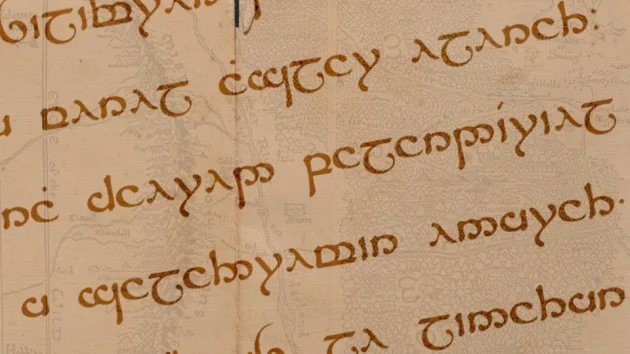
Language Typical Speakers Script
Abyssal Demons, chaotic evil outsiders Infernal
Aquan Water-based creatures Elven
Auran Air-based creatures Draconic
Celestial Celestials (angels, devas) Celestial
Common Humans, halflings, half-elves, half-orcs Common
Deep Speech Mind flayers, beholders
Draconic Kobolds, troglodytes, lizardfolk, dragons, dragonborn Draconic
Druidic Druids (only) Druidic
Dwarvish Dwarves Dwarvish
Elvish Elves Elvish
Giant Ogres, giants Dwarvish
Gnomish Gnomes Dwarvish
Goblin Goblinoids, hobgoblins, bugbears Dwarvish
Gnoll Gnolls Common
Halfling Halflings Common
Ignan Fire-based creatures Draconic
Infernal Devils, Tieflings Infernal
Orc Orcs Dwarvish
Primordial Elementals Dwarvish
Sylvan Fey creatures (dryads, brownies, leprechauns) Elvish
Terran Xorns and other earth-based creatures Dwarven
Undercommon Drow, Underdark traders Elvish

Animals, Plants, Vermin, and Oozes typically do not have languages.

Constructs, Deathless, Undead, and Elementals are usually created and understand the language of their creator.

Aberrations are just freaky, and may or may not speak any known language.

This list isn’t intended to be a list of all D&D languages. For one thing, it doesn’t include all race-specific languages. The grell language, for example, is only spoken by the grell. One source says that other creatures cannot learn the grell language. There are a few other languages that are  race-specific, such as the Slaad. I will not attempt to keep this list updated with every monster in the multiverse that has their own race-specific language.

D&D 3.5 – TURN UNHOLY (replaces turn or rebuke undead)

This is an excerpt from my D&D Lite rules. It is an alternative to the turn undead ability of clerics and paladins as presented in D&D v3.5. Rather than undead, this effects unholy. Unholy normally includes un-dead, demons, and devils. Each faith has its own definition of which creatures are unholy to that religion. They are typically identified in the holy writings of that faith.

By boldly presenting his holy symbol and uttering holy words, clerics (and paladins at -3 levels) can turn away the enemies of his faith. A cleric can attempt to turn away un-dead, demons, and devils. Some clerics of particular faiths may be able to turn away other kinds of creatures, depending on what powers their deities award them.

A turning check is a level check to which the character also adds his Charisma modifier. (Use the character’s effective turning level, which is equal to class level for a cleric or class level -3 for a paladin.) The DC is 10 + the creature’s Hit Dice + its turn resistance (if any).

You can turn unholy a number of times a day equal to 3 + your Cha modifier.

You can affect a number of Hit Dice of creatures equal to three × your effective cleric level on any one turning attempt. For example, a 4th-level cleric (or 7th-level paladin) can affect up to 12 HD worth of creatures, which could mean two creatures with 6 HD each, four creatures with 3 HD each, or any other combination that adds up to 12 HD.

You make one turning check for the entire group of unholy creatures. You affect the closest unholy first. You can affect unholy within 60 ft and in the line of effect.

Turned unholy flee for 10 rounds (1 minute). If they cannot flee, they cower (giving any attack rolls against them a +2 bonus). If you approach within 10 feet of them, however, they overcome being turned and act normally. You can attack them with ranged attacks (from at least 10 feet away), and others can attack them in any fashion, without breaking the turning effect.

Demons, devils, and unholy clerics are always allowed a WILL saving throw to avoid being affected. Deities and their Avatars cannot be turned.

SUCCESS: If your cleric level is 4 or more points higher than the unholy’s HD it is destroyed. If the unholy’s HD is 4 or more points higher than your cleric level it is unaffected. All others are turned.

FAILURE: If your cleric level is 4 or more points higher than the unholy’s HD it is turned even if you fail your turning check. All others are unaffected.

CRITICAL SUCCESS: If you roll an unmodified 20 on your turning check, all creatures that would have normally been turned on a successful check are destroyed instead. All others are turned with the exception of unholy creatures with a HD 4 or more points higher than your cleric level. They stay but are “frightened” by your holy symbol for the duration of the encounter. Creatures that are frightened by your holy symbol won’t approach close enough for you to touch them with it and they won’t allow you to touch them with it. They will only attack you directly if they think that it is the only way that they can prevent you from touching them. A touch from your holy symbol will do only 1d4 points of damage, but it burns and hurts very badly. Touching a creature with your holy symbol does no damage to a creature that isn’t frightened of it

D&D 3.5 – Starting Equipment

If you ever need to quickly equip a character, here is what I use in my D&D Lite house rules.

For first level characters, you can use the starting package listed below

Clothing:

Your character has one outfit of normal clothes. Your can ignore the weight of your clothing when calculating the weight you are carrying.  This will typically include sturdy  boots,  leather breeches  or  a  skirt,  a  belt,  a  shirt  (perhaps  with  a  vest  or  jacket), gloves,  and  a  cloak. The clothes have plenty of pockets (especially the cloak).  The outfit can also include any extra items you might need, such as a scarf or a wide-brimmed hat.

Equipment:

Your character has this equipment: backpack, waterskin, one day’s trail rations, bedroll, sack, flint and steel, and three torches. Add to this the equipment and money listed below for your character’s class.

Barbarian: Studded leather armor, greataxe, shortbow, quiver with 20 arrows and 8 gp.

Bard: Studded leather armor, longsword, light crossbow, case with 10 crossbow bolts, lute (common), spell component pouch and 8 gp.

Cleric: Scale mail armor, heavy wooden shield, heavy mace, light crossbow, case with 10 crossbow bolts, wooden holy symbol and 4 gp.

Druid: Hide armor, heavy wooden shield, scimitar, club, sling, pouch with 10 sling bullets, holly and mistletoe and 6 gp.

Fighter: Scale mail armor, greatsword, shortbow, quiver with twenty arrows and 8 gp.

Monk: Quarterstaff, sling, pouch with 10 sling stones and 8 gp. (no armor)

Paladin: Scale mail armor, heavy wooden shield, longsword, shortbow, hooded lantern, three pints of oil, quiver with 20 arrows, wooden holy symbol and 24 gp.

Ranger: Studded leather armor, longsword, short sword, longbow, quiver with 20 arrows and 8 gp.

Rogue: Leather armor, short sword, light crossbow, dagger, thieves’ tools, hooded lantern and three pints of oil, case with 10 crossbow bolts and 16 gp.

Sorcerer: Shortspear, light crossbow, hooded lantern, 5 pints of oil, spell component pouch, case with 10 crossbow bolts and 12 gp. (no armor)

Wizard: Quarterstaff, light crossbow, ten candles, map case, three pages of parchment, ink, inkpen, spell component pouch, spellbook, case with 10 crossbow bolts and 18 gp. (no armor)
D&D 3.5 – Dungeons and Dragons – Lite

D&D Lite Cover

Cover page for D&D Lite

The following is a document of House Rules. In this document are alternatives to the normal Dungeons & Dragons v3.5 d20 rules.

I have been playing Dungeons and Dragons since it came out in the late 1970’s. I eagerly awaited each new release of the game and embraced all of the new rules. With each new release it got better. When 3.0 was released I saw it as a re-visioning of the original game with more logical and consistent rules. It was soon followed by 3.5 which corrected some of 3.0s failings. I had great expectations for the 4.0 release, but I was greatly disappointed. Instead of streamlining and simplifying the rules, it was a whole new game. I’m not saying that it is a bad game, it simply isn’t one that I choose to play. Others felt the way that I do and other companies have tried to “fix” D&D v3.5. The Pathfinder RPG is an attempt to improve on 3.5. While Pathfinder is an improvement over 3.5 they didn’t go far enough, in my opinion, to simplify the 3.5 rules. There are also some rules-light game systems based on the d20 SRD v3.5 such as Basic Fantasy and others but after reviewing them  I found most of them to be too light on the rules for my taste.  So, instead of throwing it all out and starting over, I decided to simply make the changes that I felt v3.5 needed to make it easier and faster to play.

Overview

This is a set of “House Rules” designed to meet the following criteria:

1. Character creation and promotion should be simple, fast and easy.

2. The rule set should be fully compatible with other v3.5 stuff (adventures, sourcebooks, etc).

3. Complicated rules should be simplified to the point where you can play 90% of the time without having to look up a rule.

The intention is to simplify and speed up play, bringing back a lot the feel of the original D&D game while preserving most of the enhancements that the d20 game provides.

To accomplish this we will use the Players Handbook v3.5 (abbreviated here as PHB), with some modifications. The major changes are:

No Multiclass characters. You will be playing iconic D&D characters. These are the 11 core classes, without regard to race or sex, with each class being the “typical” stereotype character for that class.

No Feats. Each character class has its own set of special abilities; additional abilities are added as the character advances in level.

No selection and distribution of Skill Points. You get a set of core skills by class. These increase as you increase in level.

No Proficiencies. You can use the weapons and armor you start with and can quickly learn to use others in-campaign.

No Alignment. Or, more accurately, there are no alignment related game rules and effects. Character alignment is optional.  We will substitute “Unholy” for “Evil” in most Clerical spells and effects.

No separate rules for Bull rush, Disarm, Overrun, Sunder or Trip. These are replaced with one simple “heroic actions” mechanic.

No Attacks of Opportunity. Characters are required to make an ability check (a “heroic action”) to attempt to pass through a threatened square, or perform non-attack actions within a threatened square. This eliminates the need for Attacks of Opportunity.

Rules for Grapple, Turn Undead, nonlethal damage and Counterspells have all been simplified.

This document is not intended to replace the PHB, but to supplement it. Many of the rules from the PHB have been repeated here for convince. Wherever something is mentioned for which I haven’t provided adequate information (Darkvision for instance) refer to the PHB.

You can download a free copy of this PDF file here: Dungeon-n-Dragon-Lite

The above file contains a Character Record Sheet, but here it is as a seperate PDF file: Character Sheet

Here are some Fast-Play Character Sheets.

Hare is an Animal Companion / Familiar Character Sheet.

Corrections and changes are  posted in this addendum.

As always, I would greatly appreciate any comments or suggestions.